Proofreading 101

It’s happened to me many times over the years, and to many other editors I know: Someone calls, or emails, or comes up to me at a social gathering and asks, “How much would it cost to proofread my novel?”

Or “my [fill-in-the-blank]”: memoir, thesis, dissertation, résumé, website, whatever.

I quickly learned that what the writer invariably wants is editing, not proofreading.

Proofreading is the last step before publication. As I wrote in “Editing? What’s Editing?,” of all the levels of editing, proofreading “is the most mechanical of all. It means catching the errors that have slipped through despite all the writer’s and editor’s best efforts.”

To proofread something that hasn’t been adequately edited is an exercise in hair-tearing frustration. Of the gazillion things that need fixing, I can only fix the ones that are flat-out mortifyingly wrong. I learned long ago to say, “No, I’m sorry, I can’t proofread your manuscript. I think what you’re really looking for is an editor.”

typoAt the moment, though, I’m in the middle of a proofreading job. Five papers that will be published in an economics journal. They’ve been edited. They’re dense, technical, but clearly written. I’m no economics expert. I don’t know the jargon. I’m looking for typos and grammatical errors. Since the journal publisher wants consistency across the five papers, I’m also looking to apply the journal’s house style. Taylor Rule or Taylor rule? Macroprudential or macro-prudential? Either option is correct, but the journal prefers “Taylor rule” and “macroprudential.”

When I started editing and proofreading in the 1970s, every copyedited manuscript had to be typeset from scratch. So proofreading meant reading the proofs — the typeset copy that would be laid out to produce the print-ready pages — against the manuscript. This could be a two-person job: one would read the ms. aloud and the other would mark the proofs. We’d read the punctuation and stylings as well as the words: “Jack pos S” meant “Jack apostrophe S” or “Jack’s.”

Proofreaders who worked solo developed the knack of reading proof against ms. and noting all discrepancies. I got to be pretty good at it, but I’m not sure I could do it now. Thanks to the digital revolution in publishing, I haven’t had to for a long time. These days the writer turns in an electronic file — usually in Microsoft Word, the editor works in Word, the copyeditor works in Word, the author reviews the edited file in Word, and eventually the Word file becomes the raw material for the proofs. Each version is cleaner than the one before it.

As a result, much proofreading these days is “cold” or “blind” proofreading. This is what I’m doing with the economics papers: reading the proofs without comparing them to any previous version. In effect, there’s no previous version to compare them to: the previous versions have all been incorporated into the proofs I’m reading.

prooffreadingWhen I’m proofreading, I don’t read the same way as I do when I’m copyediting, or editing, or critiquing, reviewing, or reading for pleasure. The biggest difference is focus. I’m excruciatingly focused on the text letter by letter, word by word. It’s exhausting. When my attention shifts into phrase-by-phrase or sentence-by-sentence mode, I have to pull it back. Otherwise I’ll miss the misspelled word, the double “the,” the semicolon cheek-by-jowl with a comma where only one is needed.

If you’re a crackerjack speller and know your punctuation cold, you can learn to proofread, but it’s going to take plenty of practice before you can do a creditable job. And the usual caveats apply to proofreading your own work: if you can possibly avoid it, do; but if you can’t, leave a week or two between the editing and the proofreading. What makes copyediting or proofreading your own work such a challenge is that you know what it’s supposed to say. If your character is named Jack, you’re going to see “Jack” on the page — even when it says “Jcak.” If you’ve been misusing a word all your life, you’re not going to be able to call the error to your attention.

If you’re not a crackerjack speller and if your punctuation skills are less than stellar, you do need a good proofreader. Trust me on this.

The Editor Queen’s Song

With apologies to Gilbert & Sullivan . . .

Here is the sole surviving song from The Edits of Freelance, a legendary operetta about a band of jovial, impecunious, beer-swilling copyeditors living off the New English coast. The rest of the script sank with all hands during an ill-advised and possibly inebriated attempt to walk across Vineyard Sound on Fireworks Night.

For those unfamiliar with the show: Young Frederika’s parents are highly placed in the Halliburton World Government, but Frederika has nothing but contempt for their conspicuously consumptive lifestyle and so runs off to join the Freelancers. After much waving of weapons and paying of bribes, a detachment of lawyers, accountants, and transportation security screeners have found Frederika and persuaded her to meet with her parents on the privately owned and heavily fortified island of Gnoshon. Frederika is reluctant, but the Lawyer Chief has warned her that the Halliburtonian Triumvirs know that the Freelancers possess pencils of mass destruction and are prepared to act accordingly. The Editor Queen and her Editorial Associates bid Frederika a rousing farewell with this song.

CHORUS

Editor Queen:
For I am the Editor Queen!

Associates:
You are! Hurrah for the Editor Queen!

Editor Queen:
And it is, it is a glorious thing to be an Editor Queen!

Associates:
It is! Hurrah for the Editor Queen, hurrah for the . . .

Editor Queen:
Oh, better far to just get by
editing books with standards high
than take some far more lucrative work
p
olishing crap for some rich jerk!

Away to the corporate world go you
where words are false and no one’s true
But I’ll be true to the song I sing
and manage to thrive as an editor queen!

CHORUS

Associates:
For she is the Editor Queen!
She is! Hurrah for the Editor Queen!

Editor Queen:
And it is, it is a glorious thing to be an Editor Queen!

Associates:
Hurrah for the Editor Queen, hurrah for the Editor Queen!

Editor Queen:
When I sit me down to pummel some prose
I smack my lips and I hold my nose
I shred a few more sentences, true,
than a novice editor ought to do

But many a pro at a top trade press
to make a book from an awful mess
must manage somehow to slog through
more gobbledygook than ever I do.

CHORUS

Associates:
For she is the Editor Queen!
She is! Hurrah for the Editor Queen!

Editor Queen:
And it is, it is a glorious thing to be an Editor Queen!

Associates:
Hurrah for the Editor Queen, hurrah for the Editor Queen!

Repeat CHORUS as Frederika climbs into the waiting dinghy and the Associates shower her with Post-it notes.

Possible rescue on the horizon?

Possible rescue on the horizon?

Gatekeepers

In a Facebook discussion about my recent blog post “Shibboleths and Other Pitfalls,” my friend Greg Feeley, writer, critic, and adjunct professor of writing, posed a question: “What about ‘like’ / ‘as if’ (or ‘as though’)? I still teach my students the distinction, because they should know formal English — the kind the people who read their interview cover letters will judge them by — as well as the English they already speak perfectly well.”

He’s right, both about “like” the conjunction and about the general principle. I grew up with the ad campaign for Winston cigarettes whose key sentence was “Winston tastes good like a cigarette should.” I remember English teachers and other adults going up in the air about “like a cigarette should.”

“As!” they’d yell. “It should be ‘as’!”

They probably said stuff like “the youth of America is going to hell in a handbasket,” or maybe western civilization was going to hell in a handbasket, and all because of this damned cigarette ad.

I probably went around saying stuff like “Say it like you mean it” just to piss them off.

“Like” the conjunction may have been around since Chaucer’s time, as the American Heritage Dictionary notes, but plenty of well-educated English-speakers don’t like it at all. They may dislike split infinitives, place great value on the which/that distinction, or subscribe to other shibboleths and zombie rules whose justification is shaky . . .

But, as Greg points out, they may be the ones reading your interview cover letters, or your agent queries, or your grant proposals.

They’re the gatekeepers, in other words. Gatekeepers are the ones you have to get past in order to get what you want: an agent, a publishing contract, a job, a grant, whatever it is.

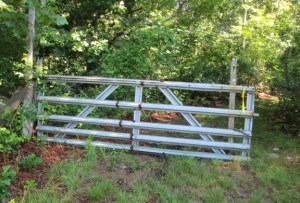
You can get by this gate, but not in a car.

You can get by this gate, but not in a car.

I was a gatekeeper once. Between 1989 and 1991 I edited three original anthologies of women’s fantasy and science fiction: Memories and Visions, The Women Who Walk Through Fire, and Tales of Magic Realism by Women (Dreams in a Minor Key). Over three years I read nearly a thousand stories — and accepted a grand total of 46.

Think about it. For every story I accepted, I rejected about 21. At first, I considered every good story — and there were a lot of them — a possible YES. Before long, the numbers got to me. My attitude changed. When I started reading each story, I was looking for reasons to say NO.

Before that, I’d heard editors and agents say that within a very few paragraphs of a story, a very few pages of a novel, they knew whether the work was publishable. How unfair! I thought. How could they possibly tell?

I read most of those thousand f/sf stories through to the end. I learned to trust my snap judgments. A story had to be more than “good” to make it into the YES or even the MAYBE pile. I learned to look for intangibles: energy, originality, clues that I’d never read anything like this before.

After that I had much more sympathy for the gatekeepers.

Even the ones who are using shibboleths and zombie rules to stick your query or cover letter or proposal in the NO pile. They’re probably swamped with good letters and applications. Their “sort” parameters may be flawed, but they’ve got to keep the MAYBE pile down to manageable size.

The moral of the story is that when you’re dealing with gatekeepers, give the gatekeepers as few reasons as possible to say NO. Follow the appropriate guidelines. Use standard formatting, or whatever format the organization or publication prescribes. And avoid the shibboleths and other pitfalls that may set the gatekeepers off. Pay attention to your teacher, your editor, and all those handy “10 things to never do in your writing” lists that are all over the Web. (Yes, I just split an infinitive. This is why I like being my own gatekeeper.)

If you’re an editor, teacher, reader of grant proposals, or other gatekeeper, you can do your bit too. Placate the shibboleths but don’t use them to sort people into SMART and STUPID, YES and NO.

Think of the language as your wardrobe. When you dress for a cocktail party, you don’t put on the same clothes you wear to do barn chores. Clothes don’t make the person, and neither does word choice, but there are plenty of people out there who think otherwise. Be prepared.

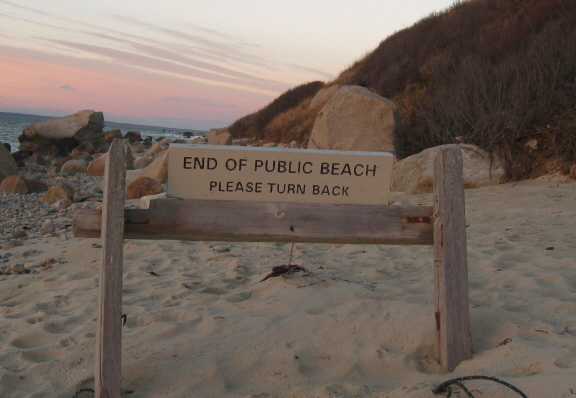
turn back

At least they’re polite about it.

Shibboleths and Other Pitfalls

For all too many people, the English language is a minefield. They’re afraid that if they take one wrong step, something will blow up in their face.

hidden cove NTIt gets worse when they learn you’re a writer, a teacher, or (gods forbid) an editor. Some people laugh nervously. Others clam up.

Many of those explosive devices we’re so afraid of are shibboleths. Like “Never end a sentence with a preposition” and “Don’t split infinitives.”

What’s a shibboleth? Here’s what the American Heritage Dictionary had to say:

  1. A word or pronunciation that distinguishes people of one group or class from those of another.
  2. a. A word or phrase identified with a particular group or cause; a catchword.
    b. A commonplace saying or idea.
  3. A custom or practice that betrays one as an outsider.

old courthouse rd 2Readers and writers, teachers and editors, are forever getting them mixed up with rules. How to tell a rule from a shibboleth? Rules usually further the cause of clarity: verbs should agree with their subjects in number; pronouns should agree with the nouns they refer to. Shibboleths often don’t. No surprise there: their main purpose isn’t to facilitate communication; it’s to separate those who know them from those who don’t.

To complicate matters even further, the language is continually evolving. New words are born. Meanings morph. Nouns get verbed and verbs get nouned. If you’re too far ahead of the pack in adopting a new usage, someone‘s not going to be happy about it.

If that’s not enough, we’ve also got such everyday confusables like ensure/insure/assure, affect/effect — and is it irrespective that’s OK and irregardless that’s verboten, or is it the other way round?

No wonder English starts to look like a minefield, even to native speakers who use it all the time.

Editors have been known to make it worse. Been there, done that. It’s an occupational hazard. An example:

As an apprentice editor, I was initiated into the mysteries of the which/that distinction. “That” was for restrictive (essential) clauses: “The sweater that I’m wearing was made by my mother.” (This implies that I have other sweaters and my mother probably didn’t make all of them.) “Which” was for non-restrictive clauses: “The house, which was built in 1850, has been in his family for decades.” (The building date is extra information. It doesn’t specify which house has been in his family for decades.)

security signHoo boy, did I go wild or what. Anyone who hadn’t mastered the which/that distinction was an ignoramus. I got to look down my snoot at them. I got to educate them.

Then I learned that British English (BrE) was managing to get along quite nicely without the which/that distinction. BrE writers liberally used which” for restrictive clauses.  Their editors weren’t changing every “which” to “that.”

Wonder of wonders, I had no trouble understanding which clauses were restrictive and which weren’t.

By that time I’d so internalized the which/that distinction that it came naturally to me. This was an asset when I started copyediting for U.S. publishers, many of whom require copyeditors to change every restrictive “which” to “that.” Fortunately most writers won’t fight about this. Many have internalized the which/that distinction just the way I did. When editing the work of a BrE writer, I’ll generally stet the restrictive “which” and note it in my style sheet so the proofreader will realize that this was a conscious decision on my part, not a (gods forbid) mistake.

Another shibboleth is the widespread notion among U.S. copyeditors that “toward” is American English and “towards” is British English. They mechanically knock the “s” off every “towards” they come to. A few years back, Jonathon Owen, linguist, writer, and editor, did his master’s thesis on this very subject. As reported in his excellent blog, Arrant Pedantry, his research suggested that U.S. editors are creating the perception that “toward” is AmE and “towards” is BrE. For writers, it’s six of one, half dozen of the other. In edited manuscripts, however, “toward” overwhelmed “towards,” 90% to 10%.

In a recent online discussion, an assortment of editors took on the difference between “such as” and “like.” (If you haven’t heard of it, worry not: I’d been editing for 10 years before I was initiated into this particular mystery. Till then I thought “such as” was simply a more formal synonym for “like.”) According to those who observe the distinction, if I refer to “movies such as Lawrence of Arabia,” I am including Lawrence in the group. If I write “movies like Lawrence of Arabia,” I’m not.

Most of the editors participating in the discussion thought the such as/like distinction was a made-up “rule” — a shibboleth. I rarely use “such as”; when I use “like,” I’m not excluding the item(s) that follow from the group. I’ll wager that most writers do likewise, and — even more important — so do most readers. What this means is that if it’s important to know whether the item(s) are included or not, you better not rely on the such as/like distinction alone to get the message across. (The discussion suggested that readers of scientific literature were alert to the distinction, so if that’s your audience you’d best observe it.)

A caveat: English is riddled with sound-alike and look-alike words that don’t mean the same thing. These aren’t shibboleths. They facilitate communication. If you write or read, they’re worth learning. As an editor, I’m always on the lookout for them. The very capable author of a recent editing job consistently confused “imply” and “infer.” (A speaker implies that something is true. Her listeners may infer the truth from what she said.) I made the necessary changes and explained the difference to the author. He said he had a hard time keeping those two words straight.

Why does any of this matter? Here I turn to “Rules That Eat Your Brain,” by Geoffrey Pullum, linguist and frequent writer on English grammar and usage. “Zombie rules” are shibboleths by another name.

Though dead, they shamble mindlessly on. The worst thing about zombie rules, I believe, is not the pomposity of those advocating them, or the time-wasting character of the associated gotcha games, but the way they actually make people’s writing worse. They promote insecurity, and nervous people worrying about their language write worse than relaxed people enjoying their language.

If the language really were a minefield, what fool would venture out into it? Be brave. Write on.


Do You NEED an Editor?

So there’s this meme circulating among some editors I know. The gist is that all writers need an editor.

Sure, every writer, and every piece of writing that aspires to be read, could use or would benefit from an editor — from a good editor, or from good editing — but need?

A brochure I created many years ago, before I realized that in my area it was one thing to need editing and quite another to be willing to pay for it.

A brochure I created many years ago, before I realized that in my area it was one thing to need editing and quite another to be willing to pay for it.

That depends. Those who insist that every writer needs an editor are mostly editors. They get paid for editing. They need paying customers at least as much as writers need editors.

All needs are not created equal.

When a water pipe breaks and water starts spraying all over the basement, you need a plumber. If the toilet bowl overflows and a plunger doesn’t fix it, you need a plumber. When a faucet starts leaking into the sink and your do-it-yourself tricks haven’t worked, you need a plumber, especially if you pay for your water. The need isn’t as pressing as when the water in your basement is two inches deep and rising, but it’s there.

You will pay the plumber to come fix your plumbing. You will probably pay extra to have him/her come ASAP, especially if it’s a weekend or a holiday (as it always seems to be when pipes break and toilets overflow). Unless money is flowing into your bank account like the water flowing into your basement, you will probably put off other, less pressing expenses in order to pay the plumber.

Last fall my dentist told me that I needed a tooth crowned. Crowns are expensive — $1,500 was the estimate. Dentistry isn’t covered by my insurance. (Don’t get me started.) It didn’t need to be done tomorrow, said my dentist, but it should be done soon. Then my car needed new rear shocks, to the tune of almost $700. The car got repaired; the dentistry got put off.

My teeth were working fine; my car wasn’t. “Soon” was not “right now.” I ranked my needs, budgeted accordingly, and carried on.

So we come round to editing. Editors are not plumbers, or car mechanics, or dentists. Your basement won’t flood, your car won’t break down, and your teeth won’t fall out if you don’t hire an editor, or if the one you do hire turns out to be inadequate.

Good editing does pay for itself, but rarely in hard currency. Nevertheless, it has to be paid for in real money. Even if you get your book, essay, or story published, the financial returns probably won’t cover what you shelled out.

But that goes double for what you put into your writing, right? More than double: we’re talking exponential here. Add up what you’ve spent on classes, workshops, and how-to books. Don’t forget the time you’ve spent writing your “million words” — the ones conventional wisdom says you have to write to develop your craft. If you were looking primarily for a tangible return on your investment, you probably would have gone into plumbing, or dentistry, or car mechanics, right?

However, if you’re a relative novice whose overriding goal is to get into print as soon as possible, you do need an editor, an excellent editor who can do all the things that good writers learn to do for ourselves. (See “Editing? What’s Editing?” for a brief breakdown of what’s involved in “editing.”) One-on-one editing is time-intensive, so expect to pay well for it.

My strong hunch is that if you’re following this blog, you’re more the do-it-yourself sort. Like me.

My two drums

My two drums

My other strong hunch is that, like me, you sometimes pay for things you don’t need. I’ve spent plenty of money competing with my dog in Rally Obedience — nothing necessary about it, but it was challenging and fun and worth the expense (until I needed a new work chair and my car needed new tires).

I joined a drumming class, loved it, and, after borrowing a drum for several months, have managed to acquire not one but two congas. These things don’t pay me back in money, but they do pay me back.

If you’re serious about your writing, and especially if you self-publish, the time will probably come when the value of good editing will be worth the money you spend on it. Worth it to you.

Meanwhile, there’s plenty you can do to develop your skill as a writer and improve whatever you’re currently working on. Some of these things don’t cost at all, and they all cost a lot less than editing. Join a writers’ group or workshop. Attend a writers’ conference. Find a couple of fellow writers to share work with. Read critically; pay close attention to how the writers you respect do what they do. (Keep in mind that they’ve probably had editorial assistance along the way.) And by all means keep writing.


An Editor’s Serenity Prayer

This pretty much sums up my editorial philosophy. I look for editors who are similarly inclined. My little sign is posted where I can see it from my work chair. When it gets tatty or ripped, I make a new one.

serenity prayer


Flashbacks Happen

A flashback is a trip back in time. The story leaves the main narrative line to tell a tale that happened before the narrative began. Flashbacks come in handy in both fiction and nonfiction, but they can be confusing to the reader. An excess of them may mean that the author couldn’t figure out more graceful ways to incorporate bits of backstory into the narrative.

This is an area where editors and guinea pigs (also known as second readers) can be helpful, but I digress: This post isn’t about flashbacks in a finished work. This is about the kind of flashback that happens when you’re in the throes of first-drafting.

The fictional Wolfie is based on the very real Travvy. He wooed at the deer, but the deer wouldn't move.

The fictional Wolfie is based on the very real Travvy. He wooed at the deer, but the deer wouldn’t move.

The other day I was cruising along in Wolfie, the novel in progress, when my mind started to wander. The scene up ahead looked boring. I didn’t want to write it. In it my protagonist, Shannon, and her sixth-grade protégée, Glory, run a temperament test on Wolfie, the Alaskan malamute they’ve rescued from getting shot. One option was to describe the test step by step. I yawned just thinking about it. I’m writing a novel, not a dog-training manual.

Much as I love to write scenes in order, I’ve learned that it’s OK to skip over or skirt the scenes that just aren’t happening. So I sent Glory home to look after her little brother, Matt, while their parents are otherwise occupied.

So the next morning my trusty Pelikan was laying down line after line of brown ink on the page. It wasn’t terribly interesting — sibling interactions that probably won’t survive the first draft — but I had this idea that Glory might try to temperament-test her brother and that sounded like fun. They were out in the driveway. Glory had set up some plastic cones. Matt was pedaling his racing car  around them. Then Matt decides he wants to play on the swing set. He leaves his pedal car in the middle of the driveway. Glory reminds him — with more than a dash of big-sister exasperation — that it has to be put away. Matt scowls —

— and Glory is thrown back a couple of hours, to Shannon’s living room, where she and Shannon are temperament-testing Wolfie.

Oh my. The brown ink flowing out of my Pelikan created A Scene. It did everything I want a scene to do: show my characters in (inter)action, move the plot forward, and turn the heat up — raise the stakes, if you will, for the characters, for future readers, and of course for me. It didn’t sound a bit like a dog-training manual.

I write my first drafts in longhand because my handwriting is barely legible and my zealous Internal Editor can’t fuss at what she can’t read. My writers’ group meets every Sunday night, and since my fellow writers can’t read my handwriting either, I’m typing this first draft into Word as I go along. I edit lightly while I type, but I don’t second-guess myself about the big stuff; I do make notes about things to consider when I launch into serious rewrite. This typescript isn’t really a second draft. I think of it as version 1.5.

In Wolfie 1.5, however, that serendipitous scene will appear in Shannon’s living room, not in Glory’s driveway. Wolfie will be there. Little brother won’t.

Why didn’t that scene show up in its chronological order? Damned if I know. Writing is full of mysteries, and like the songwriter Iris DeMent, I’m content to “let the mystery be.” (Great song, by the way. Take a break and Google it.) Some scenes don’t show up in order. They show up when they’re ready. All you have to do is keep your hand moving across the page, or your fingers on the keyboard.


Location!

Location, location, location!

It’s not just about real estate. For writers it’s also about where you place the words, phrases, and clauses that make up your sentence.

English is wonderfully flexible in oh so many ways. Sentences don’t have to follow the same subject-verb-object pattern. The same word can change the meaning of a sentence depending on where it’s placed. Here’s a simple example, using “only”:

Only she would eat coffee ice cream for breakfast.

She would eat only coffee ice cream for breakfast.

She would eat coffee ice cream only for breakfast.

Phrases and clauses can mean different things depending on where they’re placed in a sentence. I do much of my copyediting for trade and university presses. The authors of the manuscripts I edit are a generally experienced, accomplished lot. They know what they’re doing. When a sentence brings me screeching to a halt, it’s often because a phrase or a clause either creates ambiguity or gives the wrong impression altogether. The phrase or clause itself is fine: it’s just in the wrong place.

typo

Recently I copyedited a biography whose author had a penchant for dropping short phrases in between subjects and their verbs. An example: “Smith, at times, tried to relax.”

Mind you, this isn’t wrong. Sometimes sticking a phrase between subject and verb yields exactly the shading and cadence you want. In general, though, proximity strengthens the connection between two parts of a sentence, and usually we want our subjects clearly and closely connected to their verbs. More to the point, this particular author was splitting up subjects and verbs so often that I suspected a literary tic — one of those habits writers get into without realizing it. So I made it “At times, Smith tried to relax.”

If you deal in dialogue or quoted material, where you place the attribution — whatever you’re using to identify the speaker — can make a big difference in how readers  read/hear the text. “He said,” “she said,” and all the rest function like punctuation. They can create a pause or emphasize a phrase or group a string of phrases together. Here’s a random example from my novel in progress. Matthew is a four-year-old being bratty in the back seat.

“That’s enough, Matthew,” said their mother, not turning around. Matthew looked surprised. “When we get home,” she promised, “I’ll put water in the play pool and you can play in it while I work in the garden.”

That last sentence could be arranged in several ways. “She promised” could come at the end, or after “play pool.” The “when” clause could come in the middle or at the end. For now I like it the way it is. (I beginning to suspect, however, that the mid-October weather is too chilly for the play pool and that Mom isn’t much of a gardener.)

Here’s a nonfiction example, adapted from the biography mentioned above:

“The big issue of the campaign,” stated Williams, “will be security.”

Coming upon this sentence, my immediate reaction was that putting the attribution in the middle weakened the connection between the subject and the object — when “big issue = security” is the whole point of the statement. So I moved it to the beginning:

Stated Williams, “The big issue of the campaign will be security.”

Again, the original isn’t wrong, but the edited version is stronger. (The author liked it better too.)

The lovely flexibility of English makes it possible to construct sentences that are perfectly grammatical but that either don’t say what the writer meant to say or make it unclear what the writer did mean to say. Here’s an example. The author is writing about the New Deal.

The Republican resurgence in the elections of 1938 and 1942 spawned a congressional counterattack against FDR’s domestic agenda which saw such agencies as the National Youth Administration and Civilian Conservation Corps vanish amidst the exigencies of war.

Huh? thought I. FDR’s domestic agenda killed the NYA and CCC? On second reading, I realized that no, it was the congressional counterattack that helped do the agencies in. The “exigencies of war” evidently had something to do with it, but “amidst” was vague about what. And was the congressional counterattack just sitting on the sidelines watching all this happen?

As a writer, I know that ambiguity can be intentional, but in a history book it’s generally not a plus. I didn’t see a way to move the “which” clause closer to “counterattack” without making a big snarly mess, so I broke the sentence in two:

The Republican resurgence in the elections of 1938 and 1942 spawned a congressional counterattack against FDR’s domestic agenda. That, along with the exigencies of war, caused the demise of such agencies as the National Youth Administration and Civilian Conservation Corps.

Because the original was somewhat ambiguous and because my edit made the cause-and-effect relationship more explicit, I flagged it with a query to the author: “OK?” It was.

mistake

Finally, here’s an instance where a very capable writer didn’t realize that the words weren’t saying quite what he meant to say. The question was whether Jones (not his real name) was “the right man for the job in China, which required more diplomatic finesse and fewer prejudices than he was capable of.”

Jones was fairly riddled with prejudices, and being capable of more wouldn’t have made him the right man for the job. The writer knew that; the problem was the word order. The fix was easy: I swapped “diplomatic finesse” and “fewer prejudices” and voilà, the question now was whether Jones was “the right man for the job in China, which required fewer prejudices and more diplomatic finesse than he was capable of.”


Praisesong for the Semicolon

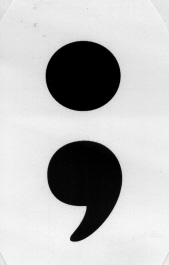
My T-shirt collection probably numbers close to 180 by now, but I’ve stopped swearing that I’ll neither buy nor accept new T-shirts. The newest shirt is pale yellow. It sports a large semicolon on the front and on the back it says: “The semicolon is not used enough; the comma is used too often.”

semicolon2Along with the T-shirt I bought two oval semicolon stickers, one for my car, the other for the semicolon hater in my writers’ group. She accepted hers with grace but promptly drew an international “NO” symbol on it with a red Sharpie.

Anti-semicolonism isn’t rare among writers and even among editors, but I don’t understand it. A writer who favors simple, usually short subject-verb-object sentences will seldom have need of semicolons, but is that any reason to hate them?

I suspect that sometimes anti-semicolonism may be a cover for the fear and loathing of complex sentences: “I hate complex thoughts” sounds rather anti-intellectual, but “I hate semicolons” sounds literarily discerning. To have a strong opinion about semicolons implies that one knows what a semicolon is, and that alone is enough to shut many people up.

As a writer and editor, I love a well-stocked toolkit. Every sentence I encounter, the ones I wrote as well as the ones someone else did, has its own needs. Punctuation marks are tools for shaping sentences, and many sentences can be shaped in different ways. Here’s an example, pulled from an essay of mine: “I’m an editor and writer; without functioning eyes, I can’t work.”

This not especially long or complex sentence could be punctuated in several ways, all of them perfectly correct:

#1: I’m an editor and writer. Without functioning eyes, I can’t work.
#2: I’m an editor and writer: without functioning eyes, I can’t work.
#3: I’m an editor and writer — without functioning eyes, I can’t work.

The first is the most matter-of-fact. To my ear it’s the most staccato, and probably the most emphatic. It leaves the reader to connect the two statements in her own way.

In #2, the colon sets up a cause-and-effect relationship between the two parts of the sentence. The colon suggests because or therefore without adding a word.

The em dash in #3 also conveys cause-and-effect, but more expansively — literally: em dashes take up more space than colons or semicolons and push the elements on either side of it further apart. Like the two-sentence option in #1, an em dash lets the reader make her own connections, but it gives her more room to do it in. To get a feel for em dashery, read a few of Emily Dickinson’s poems the way she wrote them and then with “standard” punctuation imposed. (This was done in some early published versions of Dickinson’s work.)

I read most everything I write aloud. Often I read aloud what I’m editing. I highly recommend the practice. When one reads aloud, the punctuation functions like musical notation: it signals pauses, breaks, and phrasing. I read each of the above options a little differently. In this particular sentence, period + new sentence imposed too much separation between the two thoughts. Neither colon nor dash quite worked because I wanted to downplay the cause-and-effect connection — it’s there, of course, but it’s suggested rather than stated.

Hence option #4:

#4: I’m an editor and writer; without functioning eyes, I can’t work.

Plenty of readers will swear up and down that they read all four sentences exactly the same way and don’t see an iota of difference among them. Some writers will swear likewise. Maybe they’re right, but maybe — at least some of the time — the punctuation works subconsciously.

When I’m reading for pleasure I often don’t notice what punctuation marks the writer has used, or even what word she’s chosen in preference to the various alternatives. When I’m editing, or reviewing, or just rereading to figure out How did she do that? — then I notice. Craft is often self-effacing and invisible to the casual observer, but that doesn’t mean it’s unimportant.

So my toolkit is amply stocked with semicolons, and I keep them near the front where they won’t get lost. If yours drift toward the back, or get buried under commas and dashes and colons, that’s fine with me. But don’t banish them altogether. A writer who eschews semicolons is like a carpenter who doesn’t have a Phillips head screwdriver (several of them!) in her toolbox. Sure, you can often make do with the tools you’ve got, but you can achieve more precision and (dare I say it?) elegance if you’ve got exactly the right tool for the job.

P.S. for semicolon fans: Semicolon T-shirts, mugs, stickers, and tote bag can be had on Cafepress.


Needless Words?

“Omit needless words.” You’ve heard it, right? Maybe you’ve had it drummed into your head. It comes from Strunk and White’s famous, or infamous, Elements of Style. (More about that below.)

It’s actually pretty good advice. The tricky part is “needless.” What’s necessary and what isn’t depends on the kind of writing, the intended audience, and what the author had in mind, among other things. Consider, for example, “she shrugged her shoulders.” Taken literally, “her shoulders” is redundant — what else would she shrug? And sometimes “she shrugged” is fine. Other times, the mention of “her shoulders” emphasizes the physical aspect of the gesture, or influences the pacing of the sentence. “She shrugged” and “she shrugged her shoulders” read differently. Ditto “he blinked” and “he blinked his eyes.”

Unless you’re writing technical manuals (do people ever shrug or blink in technical manuals?), you don’t want an editor who lops off “eyes” and “shoulders” just because they’re literally redundant.

However, I do a lot of lopping off when I reread anything I’ve written. Words that served a purpose in the writing may turn out to be needless in later drafts — like the ladder you climbed in order to repaint a windowsill, they can be removed when the job is done. Nearly every draft I write is shorter than its predecessor.

Here’s an example from my novel in progress. Pixel has already been introduced as an elderly dog. Shannon is her owner, Ben their next-door neighbor.

Pixel descended the stairs with a confidence that Shannon hadn’t seen in weeks and thought might be gone for good, then trotted sprily over to Ben. Shannon followed, smiling. “Every summer I think she’s gone over the hill for good,” she said, “and with the first whiff of fall she always seems to drop a couple of years.”

Rereading, my eye balked at “and thought might be gone for good.” Wasn’t that covered by Shannon’s remark “I think she’s gone over the hill for good”? Sure it was. I struck out the needless words:

Pixel descended the stairs with a confidence that Shannon hadn’t seen in weeks and thought might be gone for good, then trotted sprily over to Ben. Shannon followed, smiling. “Every summer I think she’s gone over the hill for good,” she said, “and with the first whiff of fall she always seems to drop a couple of years.”

When I read it over, I didn’t miss those words at all, so the paragraph now looks like this:

Pixel descended the stairs with a confidence that Shannon hadn’t seen in weeks, then trotted sprily over to Ben. Shannon followed, smiling. “Every summer I think she’s gone over the hill for good,” she said, “and with the first whiff of fall she always seems to drop a couple of years.”

When I’m editing, either my own work or someone else’s, I’m always looking for what a workshop leader once called “soft ice” — words that don’t bear weight. What’s soft and what isn’t, and how soft is it, is a judgment call. I may go back and forth several times in five minutes about how soft — how needless — a word or phrase or whole sentence is.

In a current job, a memoir by a very good writer, I came upon this sentence:

As we came around the last curve, we were greeted by a scene of absolute devastation.

No problem, I thought. A couple of sentences later, I slammed on the brakes and backed up. How about this?

As we came around the last curve, we were greeted by a scene of absolute devastation.

I liked it. What the narrator saw was devastation, not a scene; “devastation” is a stronger word. But it’s the author’s call. She can stet “a scene of” if she prefers it that way.

*  *  *  *  *

While writing the above, I went looking for my copy of The Elements of Style. To my surprise, I had not one, not two, but three copies. The little paperback I probably bought myself. The illustrated version, published in 2005, was a gift. So was the decommissioned library edition. The name of the library was effectively redacted, but concealed within the book’s pages were cards from two former colleagues. One of them had given it to me as a parting gift when I left my newspaper job in 1999.

Strunk & White times three

Strunk & White times three

If you Google “strunk and white,” you’ll find that many love The Elements of Style and many, including some heavy-hitting grammarians, hate it. As I flipped through it for the first time in umpteen years, I was surprised by how much useful stuff it has in it. Yes, the tone is often prescriptive: Do it my way or else. No, it doesn’t apply equally to all kinds of writing. But it’s useful.

Strunk and White’s biggest drawback lies not within its pages but within its users. They turn guidelines into godlines, thou shalts and thou shalt nots that must not be disobeyed. This happens to The Chicago Manual of Style and Merriam-Webster’s Collegiate Dictionary too, among other reference books, so I know for sure it’s not entirely the book’s fault. When the godliners are teachers or editors, the damage they do can have a half-life of decades.

But this is no reason to jettison the books themselves. Read them. Experiment with their advice. Argue with it. Above all, take what you like and leave the rest.

And run like hell from anyone who insists you swallow them whole.