Furry Dog Story

An excerpt from my novel in progress, working title Wolfie, has just been posted to the Writers & Other Animals blog.

Writers & Other Animals features regular guest bloggers, most of whom are writing about animals — especially dogs! While you’re over there, browse the previous posts. You’ll make the acquaintance of some good writers, and probably pick up a few ideas for further reading.

The excerpt, “Close Call,” features both Shannon and Pixel from my first novel, The Mud of the Place. This takes place about 10 years later. Pixel is based on the late, great Rhodry Malamutt and Wolfie (who isn’t named in the story) is based on my Travvy. Trav was born the day after Rhodry died, so the only way I could introduce them to each other was in fiction.

I usually don’t let my writing out in public until it’s pretty close to done. Wolfie is nowhere close to done: I’m maybe 50 pages into a first draft. “Close Call” represents about four of those pages. Since it comes near the beginning, it doesn’t need a lot of explanation, and it’s self-contained enough to stand on its own.

See what you think!

Travvy woos at the waves, Lambert's Cove Beach, January 2014

Travvy woos at the waves, Lambert’s Cove Beach, January 2014

Rhodry and Dis Kitty, Malabar Farm, ca. 2005

Rhodry and Dis Kitty, Malabar Farm, ca. 2005

Monologue

Writing stalls for myriad reasons. Sometimes the glass is empty, and when you peer down into the well there’s nothing there either. Maybe the secret of avoiding writer’s block is to catch yourself in a stall before it gets worse?

Last week I stalled. The well wasn’t dry — the words were flowing, but they were breaking around the scene I wanted to write. The scene I wanted to write sat on a little island in the middle of a stream. I kept floating on by, over and over. It was opaque. I couldn’t see inside. The outside told me nothing.

In the scene, an 11-year-old girl bikes home after helping a neighbor save a loose dog from being shot. Her long hair is flying, the helmet she’s supposed to be wearing is swinging from her handlebars. I’m getting to know this kid pretty well. She calls herself Glory. Her mother calls her Gloria. Already I don’t like her mother.

But the scene froze as soon as she turned in to her driveway. I could see her house. I couldn’t see inside it.

Time to do some research. Sometimes, in fiction as well as nonfiction, this means looking things up, or going somewhere in person, or interviewing someone who’s got the information you need. In this case the information was in my imagination. Freewriting is my most reliable tool for tapping into my imagination.

Too reliable. That‘s why I was stalling. I’ve glimpsed enough of where my story is going to not want to know what’s going on in that house.

Time to start getting acquainted with Glory’s mother.

I sat down in my chair with lined paper, an old-fashioned notebook, and a fountain pen loaded with the Tropical Blue ink I hadn’t used for a while.

I met Bruce at a fundraiser for a conservation group — they were raising money for rainforests in Brazil or mustangs in the Wild West, I can’t remember. I’m not into all that — life is overwhelming enough in the here and now, don’t you think?

Pen, blotter, and the first page of Glory's mother's monologue

Pen, blotter, and the first page of Glory’s mother’s monologue

Hot damn. I hadn’t even known her husband’s name. Then Glory’s mother confirmed what I’d begun to suspect: that this Bruce fellow is her second husband, and not Glory’s biological father. Glory looks so unlike her parents that her best friend asked if she was adopted. I’d been wondering the same thing.

Javier and I were talking about separating, so it’s OK that I went out for a nightcap with Bruce afterward, don’t you think?

Glory’s mother kept talking. We were at a party — or maybe I was her new therapist? She didn’t tell me her name. I didn’t ask, because I thought I was supposed to know it already. Bruce may not be Bruce either, or or Javier, Javier. That doesn’t matter. Some characters come with names firmly attached — Glory did, that’s for sure — but other names take time to settle in.

What matters is that now I knew enough about Glory’s family to see inside the house. The film started rolling again. Glory walked her bike into the garage and leaned it against the wall, noting that her mom’s car was there but her dad’s car wasn’t. She wasn’t surprised: her dad works off-island (my novel is set where I live, on Martha’s Vineyard) and often isn’t home during the week.

None of Glory’s mother’s monologue is likely to end up in the novel. If I were counting words, would these six handwritten pages count toward my quota? No idea. What counts is that I had to write them before I could write Glory’s next scene.


Whose Story Is It?

I’m posting this to both my writing blog, Write Through It; and my Vineyard blog, From the Seasonally Occupied Territories. I love it when the two converge like this.

Earlier this week I read a blog post on “What Makes Cultural Appropriation Offensive?” Both the post, by blogger TK, and the ensuing comments are well worth reading. “Cultural appropriation” is hard to pin down. Cultural borrowing happens all the time. The only way to stop it is to shut everybody into a room with people who are culturally just like them. I hope we can all agree that this is (a) impossible, and (b) undesirable. So when does cultural borrowing become cultural appropriation? And why does it matter?

My enduring lesson in why it matters came in the early 1980s. I was just starting to publish my reviews and essays. I was also the book buyer for Lammas, the feminist bookstore in Washington, D.C. As both writer and bookseller I thought a lot about ethics and politics and especially the often shifty terrain where the two converge.

What brought cultural appropriation into sharp focus for me was Medicine Woman, a book by Lynn V. Andrews. Andrews, a white woman, claimed to have studied with “Native American” shamans and been initiated into their spiritual tradition. Medicine Woman was popular with white women, including white feminists, including customers of the bookstore where I worked.

Soon after it was published, Andrews’s claims were challenged by people intimately familiar with tribal spiritual traditions. These challenges, at least at first, were published primarily in the alternative press and journals of limited circulation. Andrews’s book was published by a big-name trade publisher. It sold very well. It won Andrews more book contracts and eager attendees for her workshops and lectures. Her audience comprised primarily white women who had no experience of “Native American spirituality” — a misleading phrase because this continent is home to many indigenous spiritual traditions — and in most cases didn’t know anyone who did.

Andrews had access to a mass audience in part because of her own color and class privilege, in part because her big-name publisher thought — correctly — that her book would sell, and in part because her followers didn’t really care if her tales were authentic or not. The aura of authenticity was enough. Medicine Woman would not have had the same cachet had it been published as fiction, which it most likely was. (For a thoughtful and well-documented discussion of this case and cultural appropriation in general, see The Skeptic’s Dictionary.)

Cultural appropriation often involves racism, implicit or explicit, but not always. It does always involve an imbalance of power, but the imbalance can be based on race, sex, class, region, nationality, religion, or other factors. Here’s an example of appropriation, or mis-appropriation, in which the people doing the appropriating look a lot like the people whose stories they’re presuming to tell. Maybe it will shine a little light on the whole contested matter of cultural appropriation or, as I like to think of it, “whose story is it?”

In the summer of 1993, President Bill Clinton vacationed on Martha’s Vineyard. I’d been a year-round resident for eight years at that point, long enough to know that the year-round island and the summer island occupy the same hundred square miles of land but are not the same place. He was accompanied not only by his family but what seemed like the entire national and regional press corps. The first family made some public appearances, but most of the time they hung out on a hard-to-reach estate near the south shore. They were here for three weeks.

This left all those reporters with a lot of downtime. To justify their salaries and expense accounts, they had to file stories, so they swarmed all around the island, seeing the sights, buttonholing everyone who didn’t look too touristy, and writing about The Vineyard. I saw some of what they wrote because friends around the country sent me clippings — this was before the World Wide Web, never mind Facebook and Twitter. Often a single story would be syndicated and wind up in several newspapers.

Paley TNY clip sm

From The New Yorker for May 16, 1994

This wasn’t exactly going viral, but it did mean that stories written by reporters who’d been here for a week or so reached many, many more thousands of people than anything that appeared in either of the Vineyard’s two weekly newspapers. At the time I was working for one of them, the Martha’s Vineyard Times. I was doing what most year-round working Vineyarders do in the throes of August: trying to keep my act together and praying for September to come PDQ. In a summer resort, September means sanity, or at least the semblance thereof. But in the national press the Vineyard was all about lolling on the beach; hobnobbing with the rich, famous, and influential at cocktail parties; and seeing the sights.

The following May, still fuming, I happened upon a small item in The New Yorker about Grace Paley, a poet, writer, and activist I much admired. It said, in part:

“Paley’s stories are local, in the wisest sense. If you ask her about whether she would write about what’s going on in South Africa, she says no. A character might comment on the situation, she adds, but ‘if your feet aren’t in the mud of a place, you’d better watch where your mouth is.'”

Grace Paley nailed it: “If your feet aren’t in the mud of a place, you’d better watch where your mouth is.” Not only did that become the epigraph of my first novel, it gave me its title and sustained me in the writing of it. It sustains me to this day: my feet are in the mud of this particular place, about which so much has been written by people who only skim the surface, so what the hell else should I be writing about?

mud cover logoAnd that, in a nutshell, is why appropriation, cultural and otherwise, is a problem. Stories have power. Stories told by those with access to education and, especially, to the mass media circulate far more widely than stories told by those who lack such access. Stories that the mass audience wants to hear, or what the editors and publishers in charge think they want to hear, circulate more widely than stories that make us uneasy. Stories told by those whose feet aren’t in the mud of the place all too often come to be seen as authentic, as more real than the real thing.

Praisesong for the Semicolon

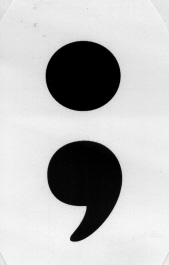
My T-shirt collection probably numbers close to 180 by now, but I’ve stopped swearing that I’ll neither buy nor accept new T-shirts. The newest shirt is pale yellow. It sports a large semicolon on the front and on the back it says: “The semicolon is not used enough; the comma is used too often.”

semicolon2Along with the T-shirt I bought two oval semicolon stickers, one for my car, the other for the semicolon hater in my writers’ group. She accepted hers with grace but promptly drew an international “NO” symbol on it with a red Sharpie.
Anti-semicolonism isn’t rare among writers and even among editors, but I don’t understand it. A writer who favors simple, usually short subject-verb-object sentences will seldom have need of semicolons, but is that any reason to hate them?

I suspect that sometimes anti-semicolonism may be a cover for the fear and loathing of complex sentences: “I hate complex thoughts” sounds rather anti-intellectual, but “I hate semicolons” sounds literarily discerning. To have a strong opinion about semicolons implies that one knows what a semicolon is, and that alone is enough to shut many people up.

As a writer and editor, I love a well-stocked toolkit. Every sentence I encounter, the ones I wrote as well as the ones someone else did, has its own needs. Punctuation marks are tools for shaping sentences, and many sentences can be shaped in different ways. Here’s an example, pulled from an essay of mine: “I’m an editor and writer; without functioning eyes, I can’t work.”

This not especially long or complex sentence could be punctuated in several ways, all of them perfectly correct:

#1: I’m an editor and writer. Without functioning eyes, I can’t work.
#2: I’m an editor and writer: without functioning eyes, I can’t work.
#3: I’m an editor and writer — without functioning eyes, I can’t work.

The first is the most matter-of-fact. To my ear it’s the most staccato, and probably the most emphatic. It leaves the reader to connect the two statements in her own way.

In #2, the colon sets up a cause-and-effect relationship between the two parts of the sentence. The colon suggests because or therefore without adding a word.

The em dash in #3 also conveys cause-and-effect, but more expansively — literally: em dashes take up more space than colons or semicolons and push the elements on either side of it further apart. Like the two-sentence option in #1, an em dash lets the reader make her own connections, but it gives her more room to do it in. To get a feel for em dashery, read a few of Emily Dickinson’s poems the way she wrote them and then with “standard” punctuation imposed. (This was done in some early published versions of Dickinson’s work.)

I read most everything I write aloud. Often I read aloud what I’m editing. I highly recommend the practice. When one reads aloud, the punctuation functions like musical notation: it signals pauses, breaks, and phrasing. I read each of the above options a little differently. In this particular sentence, period + new sentence imposed too much separation between the two thoughts. Neither colon nor dash quite worked because I wanted to downplay the cause-and-effect connection — it’s there, of course, but it’s suggested rather than stated.

Hence option #4:

#4: I’m an editor and writer; without functioning eyes, I can’t work.

Plenty of readers will swear up and down that they read all four sentences exactly the same way and don’t see an iota of difference among them. Some writers will swear likewise. Maybe they’re right, but maybe — at least some of the time — the punctuation works subconsciously.

When I’m reading for pleasure I often don’t notice what punctuation marks the writer has used, or even what word she’s chosen in preference to the various alternatives. When I’m editing, or reviewing, or just rereading to figure out How did she do that? — then I notice. Craft is often self-effacing and invisible to the casual observer, but that doesn’t mean it’s unimportant.

So my toolkit is amply stocked with semicolons, and I keep them near the front where they won’t get lost. If yours drift toward the back, or get buried under commas and dashes and colons, that’s fine with me. But don’t banish them altogether. A writer who eschews semicolons is like a carpenter who doesn’t have a Phillips head screwdriver (several of them!) in her toolbox. Sure, you can often make do with the tools you’ve got, but you can achieve more precision and (dare I say it?) elegance if you’ve got exactly the right tool for the job.

P.S. for semicolon fans: Semicolon T-shirts, mugs, stickers, and tote bag can be had on Cafepress.


By the Numbers?

I can tell you I wrote well yesterday morning, that my characters pushed the scene forward with little help from me.

I can tell you that the switch I blogged about a couple of weeks ago in “Course Correction” — setting aside the novel I was working on in favor of one on the back burner — is working out really well.

Beans

Beans

I can tell you that when I knocked off at 8:50 p.m. I was drifty to the point of disoriented. This is a sure-fire good sign: when I’m absorbed in what I’m writing, it takes a few minutes to come back to earth.

What I can’t tell you is how many words I wrote. This is partly because I was writing in longhand. Reading my scrawly handwriting is hard enough; no way am I going to count the words.

Actually I may have that backwards: I write in longhand so the internal editor can’t second-guess what I’m writing, and so the internal bean-counter can’t count the words. The internal bean-counter wishes I’d stick to Word, which oh-so-helpfully counts the words as I type them. Then the internal bean-counter could rest assured that I was really writing.

When someone crows that she wrote 893 words this morning, or 1,125, or 1,499, my internal bean-counter gets worried. Maybe I haven’t done enough? Maybe I’m not doing it right?

Dear Internal Bean-Counter:

Take a break. Seriously. It doesn’t matter how many words I wrote this morning, or yesterday morning, or in the middle of tomorrow night. If I wrote 893 words yesterday, I may jettison 878 of them today. So how many words did I really write yesterday?

Yours truly,

The Writer

Spilled beans

Spilled beans

Our society loves to quantify. It loves to count and then compare the numbers. I get it: numbers are precise and, well, quantifiable. Real life is messy and hard to pin down. Numbers can be useful. Right now WordPress is telling me I’ve got 313 words on the screen — 320, 321, 322 . . . This is good to know. When the word-counter hits 800, I know it’s time to wrap it up. (Don’t worry: we’re not going there today.)

But numbers are deceptive. They don’t tell us as much as we like to think they do. Polls don’t tell us what people think. The number on the scale doesn’t tell you how you feel. Your word count for yesterday doesn’t mention the breakthrough you had in that floundering scene, or how many words it took to get there.

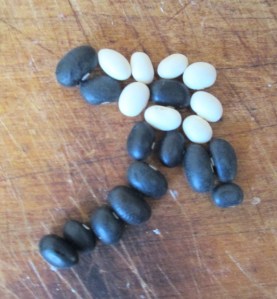
Creative beans

Creative beans

Don’t worry about the numbers. Get your hand moving across the page, or your fingers moving on the keyboard. See what happens. Your writing will teach you what you need to know. Numbers are dumb in comparison.

(Word count: 443.)


Guidelines, Not Godlines

I cringe whenever writers and editors start talking about “rules.”

What I really love about these rules is that there's never anyone around to enforce them.

What I really love about these rules is that there’s never anyone around to enforce them.

The real problem, though, isn’t the innocent little word “rules.” It’s that so many of us grow up thinking that rules are not to be broken. If we break them, bad things will happen. We’ll get a big red X on our paper. We’ll flunk the course. People will laugh at us.

Bending the rules is possible, of course, but it carries the tinge of unethical behavior, if not outright sleaziness.

Instead of rules, I think of conventions and guidelines.

Conventions and guidelines are worth knowing. They’re worth knowing well. They help you write better, and — probably more important — they help make what you write comprehensible to others.

But guidelines are not godlines. They are not graven in stone. Lightning will not strike you dead if you adapt them to your own purposes, or ignore them completely. If you ignore them too completely, however, readers may ignore your writing.

grammar policeCome to think of it, this is yet another way that writing and editing are like driving. Some people observe speed limits and use their turn signals because they’re afraid they’ll get a ticket if they don’t. True, they might — but seriously, how many cops are on the road at any one time? Not enough to ticket more than a tiny percentage of scofflaws.

Most of us figure this out pretty damn quick. We observe speed limits less for fear of getting caught speeding and more because they make it easier to control our vehicle. We use turn signals because they reduce our chance of getting rear-ended.

Learn the conventions and guidelines. Respect them. Internalize them. But bowing and scraping and trembling in fear are all optional. Guidelines aren’t godlines. The choices are yours.

Course Correction

Earlier this week I officially set aside novel #2, working title The Squatters’ Speakeasy, to work on novel #3, which doesn’t really have a working title yet. I’ve been calling it “Wolfie” for reasons that will shortly become apparent.

Travvy inspired Wolfie, but Wolfie gets into a lot more trouble.

Trav inspired Wolfie, but Wolfie gets into a lot more trouble.

Over a year ago, Shannon — a protagonist in my Mud of the Place (aka novel #1) and also a major player in Squatters — spotted a dog running through the woods. She followed it, first in her car, then on foot. She caught it as it tried to wriggle through a fence to get to the sheep on the other side, just in time to save it from the owner of the sheep, who was headed in their direction with a rifle in his hand.

I liked the story, not least because the dog, called Wolfie because that’s what he looked like, was clearly based on my Travvy. But despite my best efforts I couldn’t graft it onto Squatters’ Speakeasy. I made a new folder for it, promised to come back, and returned to Squatters.

Squatters was alive, no doubt about that. It sprawled and kept sprawling, tossing up possibilities like — well, like a dog that offers one behavior after another because it doesn’t know what its person wants. I didn’t know what I wanted either.

In early February, I took a break from Squatters to work on an essay about a controversial statue. (See “Get Me Rewrite” for details.) I also started this blog. When I got up in the morning, I couldn’t wait to sit down in my chair and start writing. I finished the essay. I kept going with the blog. Whenever I thought about waking Squatters from its winter snooze, I was overcome by an irresistible urge to play endless games of Spider solitaire.

I’ve been here before. You probably have too. Is this procrastination, pure and simple? I wondered. What’s really going on here?

As I set out on the path that led to The Mud of the Place, looming up ahead was the 40-Page Barrier. It was high. It was wide. It was solid. I’d written essays, reviews, poems, stories, and one-act plays, some of them pretty good and many of them published, but at 40 pages I choked. I was the cartoon character that runs off a cliff and keeps running — till she looks down, realizes the ground has disappeared, and plummets.

Build it scene by scene, I was advised. Brilliant! Scenes were shorter, often lots shorter, than the essays and such that I’d managed to finish. I could write scenes. Scene by scene I left the 40-Page Barrier in the distance. 100 pages, 200 . . .

As I closed in on 300 pages, a supporting character said something I hadn’t suspected. It changed everything. Prospects had been looking grim for Jay, one of my protagonists. With one character’s revelation they improved immensely. OK, I thought. I’ll finish this first draft, I’ll beat the 40-Page Barrier once and for all, then I’ll go back and rewrite.

But I couldn’t. After happily running on air for nearly 300 pages, I looked down and saw how far down the ground was. I didn’t plummet, but I couldn’t keep going either.

I went back and started rewriting. Thanks to my outspoken character, I noticed things and sensed possibilities I’d missed before. The first 300 pages went much faster this time. I charged forward. I completed a draft that needed plenty of work, sure, but it was still pretty good.

Nevertheless, the standard advice of more experienced writers is Keep going, no matter what! With Procrastination fighting for control of my time, I tried to follow it. But Procrastination was gaining the upper hand.

Then a Facebook friend linked to an article that said procrastination wasn’t all bad. An email from a novelist whose list I’d just joined assured me that writing could and should be fun. And a member of my writers’ group mentioned a paper he’d co-authored about working with survivors of incest and other abuse. I had no idea he’d done this. He had no idea this was a emerging theme in the “Wolfie” manuscript.

These had to be omens. Reassured, I’m running with “Wolfie.” But I’m still nervous. The end is a long way off, and the ground is a long way down. Wish me luck.


Grow Your Images

I loved high school English, but after all those in-depth discussions of Shakespeare, Hemingway, Austen, Fitzgerald, and the rest, I went out into the world with some wrong ideas about writing.

I thought images, symbols, and metaphors were like booby traps. Writers embedded them in their stories in order to razzle-dazzle sophisticated readers, and to trick high school students. Why was there a green light at the end of Jay Gatsby’s dock? Why, to drive us crazy, of course.

My English teacher senior year was aware of the problem. She’d ask what an author was trying to do in a particular passage and then, usually after a minute of nervous silence from the class, add, “This is not a trick question.” We didn’t believe her.

For many years, I wrote mostly nonfiction. Nonfiction, I mistakenly thought, was safe from images, symbols, and metaphors. When I started dabbling in poetry, I knew I was in trouble. Poetry is all about images, symbols, and metaphors, isn’t it?

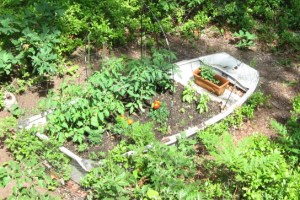
I am not a gardener, but I do have a little garden. It's in an old dinghy.

I am not a gardener, but I do have a little garden. It’s in an old dinghy.

Before long, though, I got it: Images, symbols, and metaphors grow out of the writing. They’re gifts, like sprouts in the spring garden. (Look, look! A simile!) The gardener can nourish them and help them grow, or she can decide the row is too crowded and yank some of the seedlings out. (Metaphor!)

A writer I once workshopped with relayed something she’d heard from a poet she knew: “To be a writer, you have to know one thing well.”

The thing you know well is the soil from which your images, symbols, and metaphors grow. Of course there can be more than one thing, and you can always learn more.

We humans have five senses: sight, hearing, smell, taste, and touch. Think how often we use them figuratively, as opposed to literally. A sighted person can be blind to her talents. A blind person can have vision. I was touched by his concern. That story smells funny.

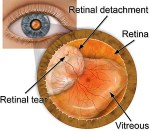
When my retina detached, I barely knew what a retina was.

When my retina detached, I barely knew what a retina was.

Almost 10 years ago, the retina in my right eye detached. In traveling back and forth to Boston, I saw firsthand the changes wrought in the wake of 9/11, which I’d managed to mostly ignore for three years because I don’t travel much and don’t have a TV. Over the following years I wrote an essay about the experience: “My Terrorist Eye.” My main images are right there in the title. They were there from the beginning.

You’ve probably heard the saying “Sometimes a cigar is just a cigar.” This is true. It’s aimed at Freudians who want to turn everything of a certain shape into a phallic symbol. At the same time, the cigar may have significance beyond the literal. If one of your characters recoils from the smell of cigar smoke — well, there may be a story behind it.

When the garden gets too crowded, it's hard to see what's going on.

When the garden gets too crowded, it’s hard to see what’s going on.

Any story or poem or essay is bound to have lots of images in it. This is fine. Gardens contain lots of plants, don’t they? All sorts of plants. At the same time, if you’ve got too many flowers growing in a limited space, your readers won’t know where to look. They may miss something that you want them to notice. Keep that in mind when you get down to revising your work.

One last thing to keep in mind: Many, many common expressions are metaphors that have long since come adrift from their literal meanings. This can get writers into trouble. Take the phrase “rein in,” as in “rein in one’s ambition.” I sometimes see “reign in” even in the work of pretty good writers. “Rein in” comes from horsemanship. If you keep horses, reins, and bridles in mind, you won’t write “reign” for “rein.” (Come to think of it, I don’t believe I’ve ever come across a reference to “unbridaled passion.” It has possibilities, doesn’t it.)

Metaphors and images can be effectively mixed and matched. They can complement each other or create dissonance. If you use them with care and know where they came from, you won’t inadvertently come up with doozies like “He’s a wolf in cheap clothing” — which also has possibilities, but seriously, you don’t want to do it by mistake, do you?

For a crash course in metaphors, see this post by Richard Nordquist, a retired English professor who is very good at explaining things.


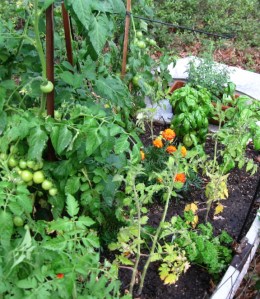
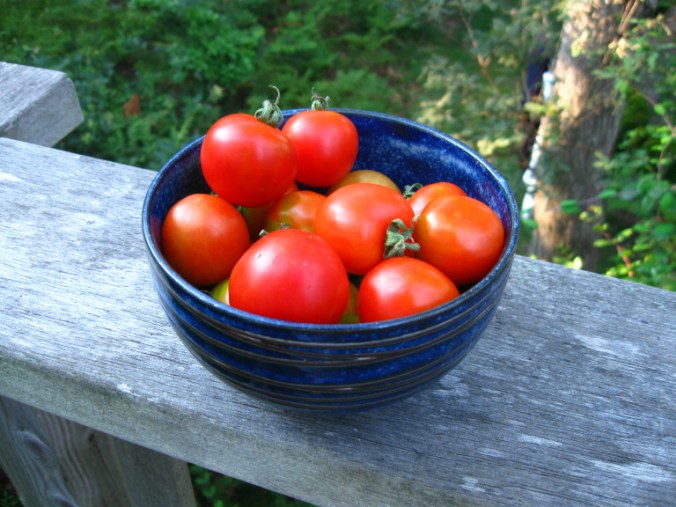
My writing may be a garden, but I'd rather eat tomatoes than words.

My writing may be a garden, but I’d rather eat tomatoes than words.

Author’s Voice

I get nervous when editors talk about “preserving the author’s voice.” There’s often a condescending tinge to it, as if “preserving the author’s voice” means putting up with sloppy writing. It doesn’t. It does, however, require a certain flexibility on the editor’s part. It may mean bending “rules” that aren’t rules at all, like “never split an infinitive” or putting a comma where the Chicago Manual of Style says you don’t need one. This makes some editors, especially copyeditors, uncomfortable. (For a rough breakdown of the “levels” of editing, see “Editing? What’s Editing?”)

Travvy, my Alaskan malamute, had no trouble finding his voice. He's very articulate, but he doesn't know beans about punctuation.

Travvy, my Alaskan malamute, had no trouble finding his voice. He’s very articulate, but he doesn’t know beans about punctuation.

I don’t think “author’s voice” had been invented when I started writing, so I never worried about finding mine.

I hope you won’t either.

If you write a lot, you will develop your own style. All the choices you make — about words, sentence structure, punctuation, and paragraphs, and especially about how to put them together — become your style. If you keep writing, it’ll evolve, depending on what you’re writing about.

Reading is crucial here. Read good writers. Pay attention to how they solve problems. If they’re really good, you might not realize that they ever had a problem. Trust me, they did. They do. They deal with awkward transitions, flaccid sentences, unconvincing characters, and all the other stuff that makes you want to tear your hair out and give up.

Even if you don’t have any problems (for the moment), you can pick up new tricks to try. The more tools you’ve got in your toolkit, the better. Go ahead and try writing in the style of an author you like. Or, maybe even better, an author you don’t like.

If you keep writing, you will develop your own style. You’ll find your voice. Trust me on this. It will happen.

Different kinds of writing do impose different requirements. Sometimes the author’s individual voice takes a back seat to the demands of the job. Think reporting. Think technical writing. If you work in such a field, you’ll develop a style that’s suited to it. Your editors will edit your work with the demands of the field in mind. This doesn’t mean you can’t do other kinds of writing as well. The ability to marshal facts and write clearly can come in handy anywhere.

Some useful tools of the writer's trade. They're here to help you, not drive you huts.

Some useful tools of the writer’s trade. They’re here to help you, not drive you huts.

Yes, you should learn the rules and conventions of whatever language(s) you’re writing in. Contrary to popular belief, these rules were not invented to drive students crazy. They’ve developed over time to facilitate communication between writers and readers. They’re tools. Tools are as important to writers as they are to carpenters and car mechanics. When a writer isn’t comfortable with a particular tool, awkwardness can result.

At the moment I’m copyediting a nonfiction book whose author seems uncomfortable with pronouns. Instead of writing “he” or “him,” “she” or “her,” he repeats the subject’s name — and to avoid repetitiousness he’ll use the first name here, the last name there, and sometimes a nickname if the subject has one. It took me a while to sort out which names belonged to the same person.

If used consciously, this technique can convey nuance and tone. You can refer to a person (including, need I say, a fictional character) by his or her last name in formal situations, then use the first name when s/he’s hanging out with friends. Switching from one to the other will then suggest to your alert readers what mode the person is operating in, what figurative hat s/he has on.

Don’t worry about finding your voice. You’ve already got one. Think of all the ways you use your speaking voice. You can SHOUT. You can whisper. You can sing. You can runwordstogether or you can pause. between. each. one. Addressing a group, you speak more carefully than you do when you’re talking with friends. Your author’s voice can be just as flexible and at the same time just as much you. Keep writing!


Writers’ Groups

Writers’ groups are like workshops, only less compressed and more ongoing. Writers’ groups are generally free. This is a big plus when you don’t have much in the way of disposable income. Unlike workshops and classes, they usually don’t have instructors. They may have a leader, official or unofficial, but that person’s job is generally to keep things on track, not to teach. In writers’ groups we learn from each other.

You may have had bad experiences in writers’ groups. If you hang out with other writers, you’ve almost certainly heard about a Writers’ Group from Hell. I know they’re out there.

Nevertheless, I’ve been in several writers’ groups over the years, formal and informal, and they’ve taught me a lot. If you aspire to write for an audience of more than one, i.e., yourself, a writers’ group can be beneficial in so many ways. Each meeting is a deadline for you to meet — very helpful if your writing is always taking a backseat to everything else going on in your life. The more work you share with other writers, the braver you’ll get about sharing your work. Other writers’ comments can help you see your own work from different angles — and your comments will help them likewise.

My first writers’ group included mostly poets and fiction writers, all women. Our numbers fluctuated, but there were about six regulars. At each meeting we’d talk about how our writerly lives were going and discuss the work of two or three members. Ideally we’d each get copies of our work to the others before the meeting, but this was long before email so this wasn’t always possible. Once we produced a potluck group reading in which more than 60 women crowded into a smallish community space to enjoy good food and good writing. This was the first public reading I’d ever done. It was wonderful.

A group I was in several years later usually met in the cozy kitchen of one of its members. The kitchen had a fireplace; except in the warmest weather, there’d usually be a fire going. We sat around the kitchen table, sipping coffee (and sometimes Black Bush whiskey), nibbling homemade chocolate chip cookies, and discussing our writing, which included short essays, one-act plays, memoir, and fiction.

At each meeting we’d do some freewriting, all with pen or pencil on paper. We took turns giving a starting word or phrase and setting a time limit — usually 10, 15, or 20 minutes. Then we’d read what we’d written aloud. We didn’t have to, but we nearly always did.

The group I’m in now meets weekly in the sitting room of its leader. She provides popcorn and beverages (usually wine, fruit juice, and water, with hot cider in season); members often contribute other goodies. At each meeting, we pass out copies of our work to everyone else and then read it aloud. As we listen, we mark our hardcopies — a check mark or “good!” for things that stand out, a question mark for things we find puzzling, perhaps an alternative word or wording if one pops into our heads. Then we discuss the work, and when everyone’s had their say, we pass the marked-up hardcopies back to the writer.

As you can see, writers’ groups vary a lot.  No one group is going to be everything to all its members. My current group doesn’t lend itself to in-depth critique: we’re all hearing each piece for the first time, and each piece gets about 20 minutes of our attention. Since most of us are writing book-length works — fiction, history, and memoir — we only see a small chunk of it each week. For comments on overall structure, we have to wait till we’ve finished a complete draft, then enlist volunteer readers or a professional editor to read the whole thing. But the weekly deadline has been invaluable, and so is reading my work aloud, and hearing others read theirs.

Yes, I have been in some groups that weren’t so helpful and that sooner or later fell apart. Keeping a group together is a group effort. I could go on, but instead I’ll quote from Marge Piercy’s poem “For the Young Who Want To”: “The real writer is one / who really writes.” If a group is monopolized by writers who talk incessantly about the writing they didn’t do, or were going to do, or mean to do before the next meeting, it will quickly become useless to the writers who are really writing.

So how to find a writers’ group? Libraries and bookstores are a good place to start looking. I know of groups that have spun off from adult ed classes: the course ended, but the writers decided to keep meeting on their own. If you can’t find one, or one that’s currently open to new members — it’s definitely possible for a group to get too big — try starting one. Start small, say with one or two or three writer friends.

And please share your experiences and tips in the comments!

Aside: “The Good, the Bad, and the Ugly, or How to Choose a Writers’ Group,” by the novelist and teacher Holly Lisle, is a wonderfully detailed guide, not just to choosing a group but for starting one.