On Second Thought . . .

I started the new year by blogging about the only New Year’s resolution I recall making in my adult life: write every single day until I finished The Mud of the Place, my first novel.

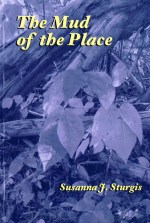
mud-cover-smShortly thereafter it dawned on me that a similar resolution might help me do what i say I’ve been going to do for two or three years now: turn Mud into an ebook. E-publishing was still terra incognita to me in late 2008, which is when Mud came out. I didn’t even get my first e-reader for another three or four years.

Be careful what you write about. It may give you ideas.

I’ve been partly mulling and mostly hiding from this idea for a week now.  Once I started this blog post, it took two days to finish it. What’s the big deal?

The big deal is that I’ve only made one New Year’s resolution in my adult life — and I kept it.

I’ve got a theory about why so many people make so many resolutions and why so many of them fail. We pit what our mind thinks we ought to do against what our body is willing to do, and the body nearly always wins. Mind can’t beat body into submission, not for any length of time, because mind needs body’s cooperation to do anything.

Mind also needs body’s cooperation to stop doing something that mind thinks it shouldn’t do. I’ve got a few stories about that. As a chronically left-brain person, I was startled, perplexed, humiliated, and ultimately humbled to learn just how powerless mind was to stop body in its tracks. If you’ve ever dealt with addictive or compulsive behavior, you know what I’m talking about.

My Mud resolution worked because body was involved from the get-go. It was willing to sit down at the computer and open a Word file. At this point mind would realize that its worst fantasies were unfounded, the novel in progress wasn’t crap, and whatever wasn’t working could be identified and fixed.

So I’ve been dancing around the idea of making this new resolution because body knew that mind wasn’t fully committed to the idea of turning Mud into an ebook.  If mind were fully committed, it would have happened already, the way I signed up for the beginning guitar class in November (very scary) and have been practicing ever since.

True to form, I made a good start on the ebook project before I choked. I started researching ebook services. I got an ISBN — Speed-of-C, which published the trade paperback version, was happy to let the ebook sail under its flag. The book was printed from PDFs, so the corrections made in the production stage had to be transferred to the Word file from which the PDFs were made. I did that, then I started cold-reading the Word file straight through.

To my delight, the thing was good. I still liked it. I was still proud of it. But there I stalled, and kept stalling, until a few days ago I got the idea that I could make a New Year’s resolution about this.

So for the last few days I’ve been letting myself think about why my mind might not be quite ready to do this thing. As usual, the reasons were lying around in plain sight. I just had to look at them.

As a former bookseller who knows a few things about publishing, I did not believe that Mud of the Place would make a big or even modest splash in the wider world. I did believe — hell, I assumed — it would receive serious attention on Martha’s Vineyard, which is both where I live and where the novel is set.

It didn’t. Both the two weekly newspapers and the two independent bookstores largely ignored it. (The Vineyard Gazette did assign it to a capable reviewer, who wrote a thoughtful review. One of the bookstores did pay some attention — five years later, and that because a booklovers’ travel group based in Minnesota featured Mud in their two visits to the Vineyard, in 2013 and 2014.)

If a tree falls in a forest and nobody hears it, did it make a sound? If you write a pretty good novel, and no one pays attention, is it worth doing again?

Long story, but to say the least I was skeptical. Mind decided that serious writing was a waste of time. I put it aside. I looked for ways to fill the hole in my life where writing had been: training and competing with my dog, getting more involved with local politics and even running for office, training as a mediator . . .

Meanwhile, body was subtly, sneakily, rearranging my psychic landscape. Almost exactly six years ago, long after most of my friends, I got on Facebook. Loved it. Ever since I read about Margaret Fuller, I’ve fantasized hosting a salon, even though my verbal talents are more literary than conversational. Facebook was interlocking salons, mine and everyone else’s. I wandered from room to room, listening, talking, having a ball — and realizing that I didn’t need the Vineyard newspapers or bookstores to reach an audience.

Maybe a year and a half after joining Facebook, I started From the Seasonally Occupied Territories, my Vineyard blog. Two years after that, I started this one.

Travvy, upon whom the title character of Wolfie is based.

Travvy, upon whom the title character of Wolfie is based.

By then I was writing seriously again. I was even, muses help me, working on another novel. It was, I eventually realized, “all sprawl and no momentum.” It was suffering from “a surfeit of subplots.” By the time I set it aside, however, one of the subplots had coalesced into Wolfie, the novel I’ve been working on ever since (which, by the way, makes excellent use of my detour into dog training).

Like Mud of the Place, the novel in progress is set on year-round Martha’s Vineyard. It involves several of the same characters, about 10 years later. This, combined with my growing awareness of the online audience and e-publishing in general, made me think that keeping Mud alive as an ebook would be a good idea. I started working on it.

Then I choked.

What if the ebook version, like its paperback predecessor, fell in the forest and made no sound? It’s a definite possibility. Could I handle it?

I didn’t know. I still don’t. But I’m making this resolution anyway: Every day I will do something toward turning Mud of the Place into an ebook. “Something” can be as modest as proofreading two pages of the Word file at five minutes to midnight, but I will do something.

Watch this space. You’ll be the first to know when I get there.
 

How to Write

In a New Year’s Day post to From the Seasonally Occupied Territories, also known as “my other blog,” I wrote about the only New Year’s resolution I remember making as an adult. It was for 2002 and, surprise, surprise, it was about writing.

mud-cover-smI’d been working on my first novel, The Mud of the Place, for three or four years at that point, usually in fits and starts.  I’d never successfully completed anything longer than 40 pages. It was like 40 pages was the edge of a cliff and now that I had a novel draft of 300 pages or so, I was looking down into an abyss with nothing under my feet. I was terrified.
Terror kept me from looking at my manuscript, and the longer I went without looking, the more certain I was that the thing was total, unsalvageable crap.

So my resolution? I will work on the  novel every day until it’s done.

And I did. Some days I wouldn’t open the Word file till five minutes to midnight. Every single time I’d see that the ms. wasn’t crap at all and that just by looking at it I’d know what to do next.

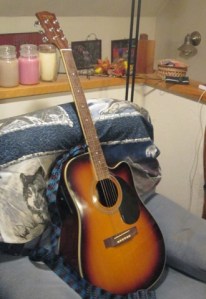
guitar“Beginner,” my New Year’s Day blog post, is about learning to play the guitar. For (semi-)recovering perfectionists like me, learning anything new or doing anything for the first time can be very scary, and sure enough, learning new things is hard. My fingers won’t do what I want them to do, or they won’t do it fast enough, or everybody else in the class is getting it faster than I am. Yadda yadda yadda.
As a teenager I had fantasies of falling asleep and waking up a guitar virtuoso. It never happened. I didn’t dare pick up a guitar or even tell anyone how much I wanted to learn how to play. At that point in my life, being a fumble-fingered beginner was too scary to contemplate.

The intriguing thing is that by that point I was already pretty good with words, and over the decades I’ve gotten better. If I’m a virtuoso at anything, it’s writing and editing — which, by the way, I didn’t realize were considered separate skills till I was promoted from clerical worker into my first editorial job. I was 28 at the time.

But I don’t remember how I learned to write, any more than I remember learning how to speak English. Come to think of it, I had the same fantasies about French, Spanish, and Arabic that I had about the guitar: that I’d wake up one morning with a native’s fluency, having skipped the years of stumbling around making a fool of myself.

I do remember diagramming sentences in grade school, and vocabulary quizzes.  In fifth grade, I wrote a story for my class’s one-shot newspaper. I also adapted a young readers’ biography of Patrick Henry into a play that my class produced. (I got to play Patrick Henry. My most vivid memory of the production is that Thomas Jefferson was twice as tall as I was.)

So evidently I’d achieved some facility by that point, though I’ve no recollection how. I must have progressed through the beginner and intermediate stages without major trauma. By the time perfectionism kicked in for real, probably in early adolescence, I must have been so confident in my facility with words that I knew I couldn’t look or feel like a fumble-fingered fool.

The big problem with not knowing how I learned to write is that I haven’t a clue how I’d go about teaching writing. I’ve actually considered taking a how-to-write course or two, just to find out how others do it. Unfortunately, or maybe not, the opportunities available locally are very limited. Sure, I could devise lessons about parts of speech and sentence structure and the other mechanical stuff, but how to teach the feel for the language that makes me so good at what I do?

I haven’t a clue, beyond “Keep writing, keep reading, keep listening, keep trying new things.” If you’ve got any ideas, please let me know!

Knock Knock

“Your writing will teach you what you need to know” is one of my mantras. (My other biggie is “The way out is through.”)

It will, too. It does. Sometimes, however, I’m a little slow on the uptake.

Like yesterday.

In my journey through draft #3 of novel #2 I’d reached what I thought of as the novel’s set-piece. Most of Wolfie takes place either outdoors or in the various characters’ kitchens, living rooms, and studios (two of them are artists). Most scenes involve only two or three characters. This set-piece happens in a public place, a restaurant, with a dance band playing and a cast of — well, not thousands, but definitely dozens. A couple hundred maybe.

Approaching this scene, I had some apprehensions. The scene was contrived — by me, truth to tell, but still contrived. Somehow my villain had to see that his two nemeses knew each other. One of them strongly suspects his villainy; the other is becoming suspicious.

My mind contrived A Scene: a retirement party for a woman who’s the mentor of one nemesis and a respected former colleague of the other. The connection I needed happened. The story moved on.

But I couldn’t get the honoree out of my mind. I’d invented her for the occasion. She wasn’t real. But then this:

Now Lorna [the honoree] leaned in close enough for Shannon [POV character] to smell her perfume and notice the tiny beads of sweat on her forehead: Lorna had been getting down with the youngsters. “The real wonder,” she said, “is that I’ve survived this long. Promise you’ll call on me one of these days?”

Finally I got it. Lorna’s got a piece of the puzzle, a role to play. I’m gonna call, Lorna. I promise.

6 Questions for Creative Reflection

The only New Year’s resolution I made in my adult life was when I was working on my first novel, The Mud of the Place, and was desperately afraid I was going to choke and not finish it. I resolved to work on it every day until it was done. Note that I did not resolve to write X number of words every day or for X number of hours. Sometimes I was so panicky that I opened the file at 10 minutes to midnight — and every single time I found something that needed doing.

Pretty much my only resolution is “Keep going,” and I make it every day. Nevertheless, I do like this list of non-resolutions and think I will give them a try. Maybe you will too.

Maja Todorovic's avatarBusiness in Rhyme

creative_reflection

New Year is often a time when we want to close one chapter of our lives and start fresh – with new ideas, with new energy and determination to fulfill our goals.

What usually happens, we do set new goals but as the months progress, so does our goals whittle along with autumn yellow leaves – until they become forgotten, unfulfilled and replaced by random events called life.

Instead of making a New Year’s resolution list, I have a different proposition for you. Why ‘hit your head against the wall’, and think of what and how you can accomplish when you are looking for the answers in the wrong place?

Here are 6 questions for your creative reflection exercise that can help you evaluate what you have accomplished in the previous period/year and maybe start from there? You might have a project that you could finish or idea that didn’t…

View original post 361 more words

“Berryman” by W. S. Merwin

So much insight here, and so many great lines (“. . . but he was deep / in tides of his own through which he sailed / chin sideways and head tilted like a tacking sloop”), but these are the ones that grabbed me hardest: “I asked how can you ever be sure / that what you write is really / any good at all and he said you can’t . . .”

Hecate Demeter's avatarhecatedemeter

2016-black-woman-writing-and-journal
Berryman
I will tell you what he told me
in the years just after the war
as we then called
the second world war
don’t lose your arrogance yet he said
you can do that when you’re older
lose it too soon and you may
merely replace it with vanity
just one time he suggested
changing the usual order
of the same words in a line of verse
why point out a thing twice
he suggested I pray to the Muse
get down on my knees and pray
right there in the corner and he
said he meant it literally
it was in the days before the beard
and the drink but he was deep
in tides of his own through which he sailed
chin sideways and head tilted like a tacking sloop
he was far older than the dates allowed for
much older than I…

View original post 134 more words

Going Public

Recently I critiqued two book-length manuscripts, both novels and both promising. Before the authors contacted me, no one else had read either manuscript all the way through.

I say this not because it’s unusual but because it isn’t. Writing may be a solitary activity, but publishing is not. To publish is, by definition, to make public. (I’m not kidding about this. Look it up.) To many aspiring writers it seems easier to imagine putting their work before hundreds or thousands of strangers than to share it with people they may know personally. Is it surprising that so many writers labor for years on a book-length manuscript and then choke when it comes time to start seeking a publisher?

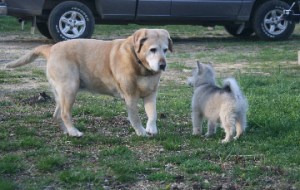
Puppy Travvy (right) meets Chamois, a mature yellow Lab, spring 2008.

Puppy Travvy (right) meets Chamois, a mature yellow Lab, spring 2008.

Making our work public does not come easily to most of us. It does takes practice. Think of your work in progress as a puppy. Puppies do better when they get to meet other puppies, adult dogs, and people of various sizes. At the same time, their owners learn more about the pup’s personality and maybe what the pup could use in the way of socialization and training.

No, you don’t need to let your work in progress out of the house before it and you are ready, but do get used to putting your words out in public and (if you’re lucky) getting responses from readers. There are lots of ways to do this. Blog. Contribute to the blogs of others. Review the books you read on GoodReads. Write press releases for the organizations you’re active in or occasional stories for the local paper. Join or start a writers’ group. Etc.

I’ve been taking Wolfie, my novel in progress, to my writers’ group scene by scene since early on. This has been good practice for me because I’m perfectionist enough to be uncomfortable letting anything out of my sight before it’s done. Once I was well into draft 3, I decided chapter 1 was ready to go out before a public that hadn’t heard any of it before.

Fortunately the ideal venue for such forays exists at my town’s library. Writers Read, as it’s called, meets roughly once a month. Unlike the usual writers’ group, regular attendance is not expected, but it’s developed a core of regulars that offer stability while others drop in from time to time. Six or seven writers read at each gathering. To avoid listener fatigue, the time limit of nine minutes is firmly enforced by the moderator. This presents a challenge for writers of longer works, but even novels and memoirs generally include scenes that can stand on their own without too much explanation (which is included in the nine minutes).

Personal responses from listeners are encouraged, but this is not a critique group. “I was confused by this bit” is OK; “this is confusing” is not. The moderator enforces this too. It often happens that one listener loves what another listener is confused by. This might be the most valuable lesson any writer can learn from taking her work out in public: different readers may have wildly different reactions to the same passage, which means it’s up to the writer to decide what to do about it.

Most of the participants in Writers Read are writers, but non-writers and future writers are more than welcome. I suspect that venues like Writers Read help novice writers get their courage up, first to write and then to share their work.

If nothing like this exists in your area, try starting something yourself. All you need is a space, a bunch of writers interested in sharing their work, and a few ground rules to keep the gatherings friendly and fruitful.

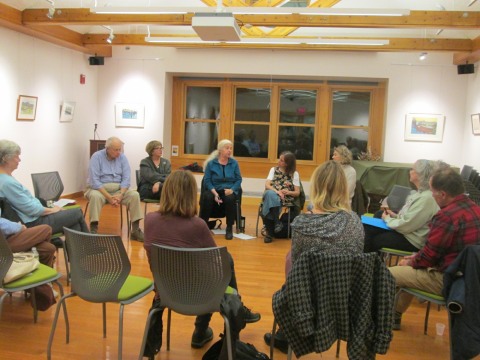
Writers Read, November 2016, West Tisbury (Mass.) Free Public Library

Writers Read, November 2016, West Tisbury (Mass.) Free Public Library

Storytelling: Get good at it if you want to fight back

In the wake of the US election results and the campaign that led up to it, I’ve been wondering a lot about whether writing is worth it. Especially my writing and the writing I edit, but really writing in general. Toxic stories have been told and retold over and over. Even people who should know better often don’t recognize them as toxic, or won’t say so out loud. The toxic stories have big money and power behind them. The other ones don’t. So I’m looking for reasons to keep putting one word after another, to make my writing the best it can be and help others to do likewise. Here’s a start.

Mike Finn's avatarMike Finn's Fiction

apocalypse-now-sign

If, like me, as you watched Brexit and the US election, disbelief became disappointment bordering on despair, then you may be feeling disempowered right now.

The wrong side won. Bad things are going to happen and there’s nothing you can do about it except protect yourself and those you love and wait for sanity to return.

I believe that that response has been engineered. It is the story that those who won, want those of us who oppose them to believe.

The first step to stopping them is to recognise that this is a story and not the truth.

The second step is to change the story.

Salman Rushdie said:

“Those who do not have power over the story that dominates their lives—the power to retell it, rethink it, deconstruct it, joke about it, and change it as times change—truly are powerless, because they cannot think new thoughts.”

I want…

View original post 707 more words

5 Reasons for “Quick Pass” on a Query Letter

Good advice on writing a query letter, whether you’re querying agents or independent publishers willing to read unagented manuscripts.

Carly Watters's avatarCarly Watters, Literary Agent

Agents do inhale query letters. We get 1,000’s a year and go through them periodically; usually consuming them in batches of 20-100’s at a time. I try to read them once or twice a month.

Your query letter is my first encounter with you. It doesn’t have to be “perfect” (I mean that!), but it does have to convince me why I need to read your writing, get lost in your voice, and why this particular story matters more than the others.

Your query letter is the first opportunity toengage me and showme how you’re a storyteller no matter the medium. Storytellers can write a novel and explain it in a few paragraphs–they have to.

FIVE REASONS FOR A QUICK PASS:

  1. Novel that’s under 70k or over 110k. Storytellers know how long it takes to tell a story and a novel-length project requires a certain depth of story.
  2. Wordy descriptions…

View original post 198 more words

Be Brave

Writing does take courage.

blank paper

The challenge of the blank page

It takes courage to sit down (or stand up, if you use one of those newfangled standing desks) expecting words to appear on the screen or sheet of paper in front of you, hoping that those words will be worth keeping or will lead to something that is.

It takes courage to set out on a journey not knowing whether it’s worth making (probably yes, though maybe not in the ways you expect) and whether you’re equal to the task (probably not, but if you keep going you will very likely become so).

Revision is a key to this process, especially for those of us who don’t plan everything out in advance, and for those of us who do but are willing to go along when the material has other ideas. (More about planners, seat-of-the-pantsers, and improvisation in “Whatever Works,” “Notes and More Notes,” and “Backstory Happens.”)

With nonfiction, I usually know where I’m going at the start but often I don’t end up in quite that place. With fiction, my usual is to put a few actors onstage, give them a task, and see what they do with it. I write it all down and sometimes give direction, which sometimes the actors ignore.

In “When Chitchat Takes the Wheel” I blogged about critiques I did recently of two first-novel manuscripts. Both were full of promise — vivid settings, interesting characters — but both bogged down in dialogue that went on forever and didn’t develop the characters or move the plot forward.

In one case, several characters held differing views about issues crucial to them and to the plot, but they never discussed them with each other. You and I both know how that works, right? When you strenuously disagree with someone you want to get along with, you skirt the contested territory and talk about other things. This makes for amiable relations but it does not make for interesting fiction. Be brave, I told the writer. Let them go at it and see what happens.

In the other case, the endless chitchat had a different cause: the protagonist had no memories from before her mid-teens, but her traumatic early years were key to the plot. Survivors of traumatic events do repress their memories,  but giving this character complete amnesia about her upbringing did not serve the novel well. Other people remembered what she did not, so (1) she was a sitting duck for the villain, and (2) she didn’t know enough to go in search of her own past. Be brave, I told this writer too. Let your protagonist have some of her life back.

I just finished reading a novel with a promising premise: a family’s determination to avoid dealing with a tragic event leads to problems down the road. This premise is common for good reason: it often happens in real life, and there’s so much a writer can do with it. But this writer made choice after choice that kept the tragic event at arm’s length, both for the characters and for the reader. For instance —

  • Everyone affected by the event is warned not to talk about it, ostensibly to protect the one who is supposedly too fragile to handle it.
  • They actually obey the warning.
  • The novel’s sole point-of-view (POV) character is fearful and not given to thinking too hard about the past or anything else.
  • The characters rarely interact on any but the most superficial level.

As a result, the characters don’t develop and neither does the plot. Each character has a shtick, and the dialogue is often clever, but the novel came across more as sitcom than as family drama. Not surprisingly, the writer had to resort to melodrama and last-minute surprises to tie everything together. The result is less than satisfying.

What would I have said if I’d been hired to critique this novel as a second or third draft? Let your characters have their memories and their voices back. Instead of one POV character, try it with three: the three who experience the tragic event as children and then grow up with the memories, the questions, and the silences. And don’t lock them in their closets, impervious to the world and each other. Challenge them! Challenge yourself!

Be brave.

Mean Comments: When Your Self-Esteem Is at Stake

Wise counsel about dealing with criticism of the sort that only wants to tear you down, not improve your work. Writers are less likely than singers to be face to face with our attackers, but this still applies.

Songwriting News's avatarSongSmith

mean-commentsThe Drive of Being Heard

Art and music usually intend of making an impression or a statement.  Other people are inclined to voice their opinion when they’ve seen a play or heard a musical number that has moved them, whether the response is negative or positive. This drive for being heard and voicing our impressions has created an entire career; critics are paid to write or voice their reviews of various forms of art, whether it is food, movies, music, or visual.

Constructive criticism can be a great thing because it allows the artist to receive feedback that could very well improve its project. Even negative feedback can allow a creator to learn from its shortcomings and create even better work.

The Internet has become a helpful resource for artists in term of exposure, especially musicians and songwriters, as they are able to expose their work to a much larger…

View original post 881 more words