S Is for Spelling

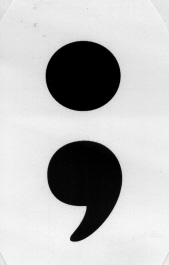
semicolonAll week, as drew closer in my saunter through the alphabet, I assumed it was going to be “S Is for Semicolon.” I like semicolons; you already knew that, right? I blogged about why I like them (and how I don’t really understand why some people hate them so much) in “Praisesong for the Semicolon.” True, that was almost three years ago, but the post holds up pretty well.

Plus it includes a link to where you can buy semicolon swag on Cafepress. I’ve already got the T-shirt, but I could use some more stickers.

S offered several other possibilities, though not nearly as many as C or P — slash (aka solidus), symbol, signature, serif, sans serif (which I just learned can be spelled as one word), schedule, speech, sentence, style sheet . . .

Spelling! Aha, thought I, that’s a big one!

Almost too big, I think a few minutes later, staring at the screen and wondering where to start, where to start?

With a trip to the dictionary, of course. Here’s what the American Heritage Dictionary (AHD) has to say about spelling:

1. a. The forming of words with letters in an accepted order; orthography.
b. The art or study of orthography.
2. The way in which a word is spelled.
3. A person’s ability to spell words: a writer plagued by bad spelling.

English-language spelling is a bear, but I’ve always been good at it, probably because (at least as a kid) I had a good eye and memory for detail. In fifth grade my nickname was Walking Encyclopedia. A few years later I was a killer at Trivial Pursuit, especially when partnered with someone who knew TV and sports a lot better than I did.

Since everyone’s the hero of their own story, including me, I early on assumed that anyone who couldn’t spell well either wasn’t paying attention or wasn’t too bright.

After I learned about dyslexia, I got a lot more tolerant. I also learned that many smart people and some very good writers are “plagued by bad spelling.” You probably won’t meet any copyeditors or proofreaders who are similarly impaired, but I know a few very capable developmental or substantive editors whose grasp of spelling and punctuation is somewhat shaky. They deal with the big picture. Copyeditor and proofreader come in their wake to tend to the details.

AHD refers to “letters in an accepted order.” Right. Even when we spell words wrong, we generally agree on how they should be spelled. If necessary, we consult a dictionary. British English (BrE) and American English (AmE) spell quite a few words differently, but in nearly all cases an AmE spelling is intelligible to a BrE speaker and vice versa: traveler/traveller, check/cheque, defense/defence, curb/kerb.

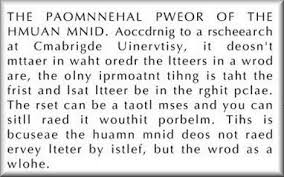
So why is spelling important? Is spelling important? Memes circulate on Facebook with the most atrocious spelling, intentionally atrocious spelling, like these:


And my favorite of all, this:
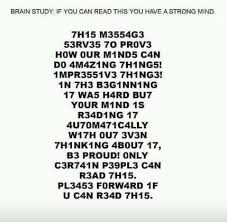
And we can read them. It’s true that the huamn mnid deos not raed ervey lteter by istlef, unless it’s proofreading, of course, but would you want to raed page after page of any of the above? Probably not. It’s exhausting. You put so much effort into deciphering the text that you’re barely taking in what it’s trying to tell you. The texts above are mainly trying to tell you that you can understand short passages of atrociously spelled words.

When words are spelled in “an accepted order,” we can devote more attention to how they’re strung together in sentences and paragraphs and what they’re trying to say. Sentence structure and punctuation serve the same purpose, by the way. They’re not trying to flummox you or make you feel stupid. If you’re trying to tell a story or get an idea across to readers, they’re on your side.

Spelling errors and typos don’t mean you’re stupid, but when you’re trying to make a good impression on, say, an agent or editor who has to wade through dozens of query letters in a week (or even a day), they don’t inspire confidence. They may even create the impression that you’re careless or clueless or less than competent. Take excruciating care with any document on which much depends.

And yes, digital spell checkers can be helpful. I use mine when I’m in a hurry, and when I’m typing on a virtual keyboard. But a proofreader, copyeditor, or careful reader can usually tell within a paragraph or two or three when a document has been spell-checked but not proofread. The spell checker knows that “reed” is spelled correctly, but it doesn’t know that you don’t reed books.

N Is for Narrative

Like many other word people, the cataclysmic 2016 U.S. presidential election campaign and its ongoing aftermath got me wondering whether my particular skills as a writer and editor could be useful and, if so, how. Clarity and accuracy seemed way down low on the country’s priority list.

Then in late January, I found Theodora Goss’s blog post “The Politics of Narrative Patterns.” It began like this:

There are all sorts of reasons the American election went the way it did, but I think one of them, and perhaps quite an important one, was the way in which our thinking is determined by narrative patterns. What do I mean by narrative patterns? I mean that in narratives, in stories, there are underlying patterns we are familiar with. They recur from story to story: stories are often variations on these patterns. When we encounter these patterns, we feel fulfilled, comfortable — we recognize them, we like to read about them. We like variation, but only a certain amount of variation. Too much variation makes us feel unsatisfied, as though somehow the story is written “wrong.”

After discussing some narrative patterns popular in our culture, Goss notes that male characters have more archetypal options than female characters. Right, thought I, thinking of the path-breaking work writers of f/sf (fantasy and science fiction, hands-down my #1 go-to choice for fiction) have been doing since the 1970s and earlier to expand the possibilities for female characters.

Then Goss ties this to presidential elections, past and present. “People did not get so excited by Barack Obama, when he first ran, because of his policies,” she writes. “No, he was the young hero who had overcome adversity and triumphed.”

And Donald Trump? “He fit another narrative pattern: the stranger who rides into town and imposes order, bringing justice to the frontier. . . . It did not hurt him that he was not morally pure, because we do not expect the gunslinger to be morally pure — no, that’s reserved for heroes.”

Immediately it dawned on me that the wise old man in the race, the Gandalf, Obi-Wan Kenobi, and maybe Walter Cronkite character, was clearly Bernie Sanders. Wise old(er) men have loomed large in my fantasy life since I was a kid, but I never “felt the Bern.” The more I researched his record, the less impressed I was. But I had such a hard time conveying my reservations to my many, many Sanders-supporting friends that I finally stopped trying.

When a narrative pattern takes hold, facts take a back seat. This applies to writing as well as politics: novels that capture the public imagination and become runaway best-sellers seldom do it on their literary merits alone. Don’t tell me the gatekeepers of the publishing world, the agents, editors, publishers, reviewers, et al., are impervious to the power of narrative patterns!

What about women? asks Theodora Goss. Plucky girls are OK, but what happens when they grow up? “We only have two patterns for older women who want political power. One is the Virgin Queen, like Elizabeth I: a woman is fit to wield power if she is willing to give up other aspects of being a woman, such as marital relationships or children.”

Hillary Rodham Clinton didn’t  fit this pattern. “What was left?” Goss asks. “The Wicked Queen. We know what she does — she seizes power (illegitimately) for her own gain, to satisfy her own ambition. She kills people or has them killed (this too was a criticism lodged against Clinton). And the Wicked Queen cannot be allowed to gain power — she must be defeated. All of our stories have told us that, from childhood on.”

Walk around that for a while. It resonates.

It also brings me round to the question of what can we word people do in this world where it seems our skills are only valued if we put them in the service of spin, obfuscation, manipulation, and outright lying.

It brought Theodora Goss around to a similar place. At first she thought (feared?) that writing had no use and maybe she should have gone into another line of work. “But now I think that one of our most important tasks is telling stories, and I am a storyteller. I am a perpetuator and creator of narrative patterns. That means I have an obligation to be aware of the patterns, to wield them in ways that are good, and true, and useful. And I can create new patterns.”

That’s the key: the old patterns won’t lose their power with the wave of a pen, but they can be undermined and transformed, and new patterns can be created. I saw it happening in f/sf, where women went from being add-ons and sidekicks to having their own adventures.

Well into the 1960s, lesbian characters in pulp fiction had basically two options: go straight or die. Cracks began to appear in the pattern before the end of the ’50s, and over the following decades, thanks in large part to lesbian and feminist writers, presses, and readers, new patterns were created. In many quarters these days “go straight or die” is an anachronism.

Note my inclusion of “readers” here. The culture’s narrative patterns are very strong, and the gatekeepers, often citing “market forces,” have a vested interest in perpetuating them. Books that break or undermine the dominant patterns are unsettling, and plenty of people don’t like being unsettled. It wasn’t a commercial press that broke the back of the “go straight or die” lesbian stereotype: it was Daughters., Inc., the small lesbian press that in 1973 published Rita Mae Brown’s Rubyfruit Jungle. The novel’s “underground” popularity caught the attention of mainstream publishers, and Rubyfruit Jungle went on to become a mass-market best-seller — and a cultural icon for a lot of us.
Narrative patterns are deeply rooted in all our heads. They’re our default settings when we read, when we write, when we choose among political candidates. They’re powerful for sure, but they aren’t invincible. Words, our words, can change them, one story at a time.


Proofreading Poetry

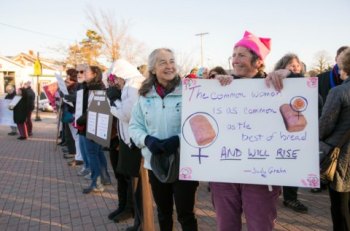
Me and my IWD sign, which says “The common woman is as common as the best of bread / and will rise.” I am, you may have guessed, a regular bread baker. Photo by Albert Fischer.

I’ve been thinking about this because, you guessed it, I recently proofread a book-length collection of poems.

Prompted by the poster I made for an International Women’s Day rally on March 8, featuring a quote from one of Judy Grahn’s Common Woman poems, I’ve also been rereading Grahn’s early work, collected in The Work of a Common Woman (St. Martin’s, 1977). So I’ve got poetry on my mind.

A 250-page book of poetry contains many fewer words than a 250-page work of fiction or nonfiction, but this does not mean that you’ll get through it faster.  Not if you’re reading for pleasure, and certainly not if you’re proofreading. With poetry, the rules and conventions generally applied to prose  may apply — or they may not. It depends on the poems, and on the poet.

Poetry also offers some tools that prose does not, among them line breaks, stanza breaks, rhyme, and meter. (These techniques and variations thereof can come in very handy for prose writers and editors, by the way.) The work I was proofreading also includes several “concrete poems,” in which the very shape of the poem on the page reflects and/or influences its meaning. “Sneakers” was shaped like, you guessed it, a sneaker; “Monarchs” like a butterfly; “Kite” like a kite.

Errors are still errors, of course. When the name Tammy Faye Baker appeared in one poem, I added the absent k to “Baker” — checking the spelling online, of course, even though I was 99 percent sure I was right. Sometimes a word seemed to be missing or a verb didn’t agree with its subject. In a few cases, the title given in the table of contents differed somewhat from the title given in the text.

Often the matter was less clear-cut. English allows a tremendous amount of leeway in certain areas, notably hyphenation and punctuation, and that’s without even getting into the differences between British English (BrE) and American English (AmE). Dictionaries and style guides try to impose some order on the unruliness, but style guides and dictionaries differ and sometimes even contradict each other.

If you’ve been following Write Through It for a while, you know that I’ve got a running argument going with copyeditors, teachers, and everyone else who mistakes guidelines for “rules” and applies any of  them too rigidly. See Sturgis’s Law #9, “Guidelines are not godlines,” for details, or type “rules” into this blog’s search bar.

Imposing consistency makes good sense up to a point. For serial publications like newspapers or journals, consistency of style and design helps transform the work of multiple writers and editors into a coherent whole. But each poem is entitled to its own style and voice, depending on its content and the poet’s intent. Short poems and long poems, sonnets, villanelles, and poems in free verse, can happily coexist in the same collection.

What does this mean for the proofreader? For me it means second-guessing everything, especially matters of hyphenation and punctuation. Remember Sturgis’s Law #5? “Hyphens are responsible for at least 90 percent of all trips to the dictionary. Commas are responsible for at least 90 percent of all trips to the style guide.”

But dictionaries and style guides shouldn’t automatically override the preferences of a poet or careful prose writer. The styling of a word may affect how it’s heard, seen, or understood. When  I came upon “cast iron pot,” my first impulse was to insert a hyphen in “cast-iron,” and my second was No — wait. Omitting the hyphen does subtly call attention to the casting process; my hunch, though, based on context, was that this was not the poet’s intent. I flagged it for the poet’s attention when she reads the proofs.

Another one was “ground hog.” I can’t recall ever seeing “groundhog” spelled as two words, though it may well have been decades or centuries ago. However, in the first instance “ground hog” broke over a line, with “ground” at the end of one line and “hog” at the beginning of the next. In prose such an end-of-line break would be indicated with a hyphen, but this poet generally avoided using punctuation at the ends of lines, instead letting the line break itself do the work, except for sentence-ending periods. “Ground hog” recurred several times in the poem, so consistency within the poem was an issue. It was the poet’s call, so again I flagged this for her attention.

One last example: Reading aloud a poem whose every line rhymed with “to,” I was startled to encounter “slough,” a noun I’ve always pronounced to rhyme with “cow” (the verb rhymes with “huff”). When I looked it up, I learned that in most of the U.S. “slough” in the sense of “a deep place of mud or mire” (which was how it was being used here) is indeed generally pronounced like “slew.” The exception is New England, which is where I grew up and have lived most of my life. There, and in British English as well, “slough” often rhymes with “cow” in both its literal and figurative meanings. (For the latter, think “Slough of Despond.”)

All of the above probably makes proofreading poetry seem like a monumental pain in the butt, but for me it’s a valuable reminder that English is remarkably flexible and that many deviations from convention work just fine. At the same time, although I can usually suss out a writer’s preferences in a book-length work, I can’t know for sure whether an unconventional styling is intentional or not, so sometimes I’ll query rather than correct, knowing that the writer gets to review the edited manuscript or the proofs after I’m done with them.

The other thing is that while unconventional stylings may well add nuance to a word or phrase, they rarely interfere with comprehension. Copyeditors sometimes fall back on “Readers won’t understand . . .” to justify making a mechanical change. When it comes to style, this often isn’t true. My eye may startle at first at an unfamiliar styling or usage, but when the writer knows what she’s doing I get used to it pretty quickly.

The above examples come from Mary Hood’s All the Spectral Fractures: New and Selected Poems, forthcoming this fall from Shade Mountain Press. It’s a wonderful collection, and I highly recommend it. Established in 2014, Shade Mountain Press is committed to publishing literature by women. Since it’s young, I can say that I’ve read and heartily recommend all of their titles, which so far include three novels, a short-fiction anthology, and a single-author collection of short stories. All the Spectral Fractures is their first poetry book. I rarely mention by title the books that I work on, but Rosalie said it was OK so here it is.

Poems of Protest, Resistance, and Empowerment

From the editors at the Poetry Foundation. Here’s a wonderful list of poems to inspire us in dark times, and to remind us that writing well in these times is desperately important.

Why poetry is necessary and sought after during crises.

Source: Poems of Protest, Resistance, and Empowerment by The Editors | Poetry Foundation

The Drive to Connect

My work nook

My work nook. It’s considerably more cluttered than it was when I took this picture three years ago.

After I get dressed in the morning, I put on the teakettle, reheat whatever is left in yesterday’s teapot, light a candle or two, and sit down in my work chair. Before I pull the tool of the morning into my lap (either pen and paper or my laptop, depending on whether I’m first-drafting or revising; today it’s the laptop), I usually reach for my copy of The Writer’s Chapbook (I’ve got the 1989 edition), open it at random, and take whatever my eye falls on as my guide.

20170118-candles-mug


This morning I reached instead for Adrienne Rich’s The Dream of a Common Language, which happened to be sitting on top of The Writer’s Chapbook. If I had to list the most important books I’ve read in my life, Dream would be in the top five. I’m still reading and rereading it almost 40 years after I encountered it for the first time. You might guess this from the fact that my copy is in two pieces and the front and back covers are less than pristine. (The spine broke between the last two pages of “Natural Resources.” This is not a coincidence.)

This morning my eye lit on the second stanza of “Origins and History of Consciousness.”

No one lives in this room
without confronting the whiteness of the wall
behind the poems, planks of books,
photographs of dead heroines.
Without contemplating last and late
the true nature of poetry. The drive
to connect. The dream of a common language.

The stanza that gave the book its title. A stanza that acknowledges and even begins to respond to the questions I can barely ask out loud: What good is writing in this world where talk is cheap, lies are endemic, and so few people seem up to the challenging of actually listening? What can a writer do?

“Origins and History of Consciousness” blends writing and loving  in imagery that can’t be easily summarized. You can find the whole thing here. At the moment I can’t find the complete text of “Natural Resources” online. It’s a long poem, and everyone loves to quote the last stanza. The Dream of a Common Language is still in print, and all of it’s included in Collected Poems, 1950–2012, edited by Claudia Rankine and published last year.

Van Morrison, John Lee Hooker : I Cover The Waterfont

This isn’t about writing exactly but it speaks to me so strongly as a writer that I think it might speak to you too. The Immortal Jukebox is one of my most favorite blogs.

Thom Hickey's avatarThe Immortal Jukebox

Often, when we tell the story of our own life, to ourselves, or to others, the narrative teems with incident. An action movie filled with high drama.

Now, reflecting on my own life I have come to realise that a more apt comparison would be one of the contemplative, steady gaze movies directed by Robert Bresson from France or Yasujiro Ozu from Japan.

The meaning is won, revealed, not through a hectic series of heroic events but powerfully accumulated through close attention to small details and patient meditation on the weathering, sometimes destructive, sometimes ennobling, passage of time.

Life is mainly waiting. Waiting. Waiting.

Waiting for what you want or need the most.

Waiting for your mother’s or father’s attention.

Waiting for the fabled excitement of love and romance and high passion to blow into your life like a hurricane.

Waiting for someone to recognise you as the one they…

View original post 588 more words

On Selfish Reading

I’m pretty much self-taught as a writer. As an editor, I had a mentor who taught me to think systematically about the words, sentences, and paragraphs in front of me, how to recognize, diagnose, and fix problems. In my first editorial job, in the publications office of a big nonprofit, I had to clear every manuscript I edited with the person who wrote it. Often these people weren’t professional writers. They didn’t have long experience to fall back on. Some of them were downright touchy. They taught me the importance of knowing what I was doing and being able to explain it. I still do that in my head even when I have no direct contact with the author (as when I edit for big publishers) and when the author isn’t likely to ask me to explain everything I’ve done.

About writing, though — the downside of being self-taught is that though I can review, critique, and coach pretty well, I don’t have a clue about how to teach writing. My syllabus boils down to “Read lots of stuff. Keep writing.” This blog post from Brevity does a fine job of showing how and how much writers (and editors too, I do believe) can learn from reading.

Dinty W. Moore's avatarThe Brevity Blog

By Anna Leahy, adapted from the forthcoming anthology, What We Talk about When We Talk about Creative Writing:

Anna Leahy Anna Leahy

In Reading Like a Writer, Francine Prose talks about reading as part of how writers learn, perhaps the most important way we learn such things as “the love of language” and “a gift of story-telling.” Of course, a writer must write, but Prose says, “For any writer, the ability to look at a sentence and see what’s superfluous, what can be altered, revised, expanded, and, especially, cut, is essential.” That ability is cultivated by reading.

“I read for pleasure, first,” Prose goes on to say, “but also more analytically, conscious of style, of diction, of how sentences were formed and information was being conveyed, how the writer was structuring plot, creating characters, employing detail and dialogue. […] I read closely, word by word, sentence by sentence, pondering each…

View original post 668 more words

How Many Is Too Many?

An editor was asking how to explain to a client that he was overusing a particular word.

Writers, even experienced writers, have our pet constructions, our favorite words. Often we don’t realize we’re overusing them. When I’m in revision mode, I’ll pause on a word and realize I’ve seen it pretty recently. I hit CTRL+F (that’s the Windows version — it’s COMMAND + F for you Mac folks), put the word in the search bar, and search upward. Recently I discovered I’d used “stage-whispered” twice in three pages. One of them wasn’t necessary. I got rid of it.

The editor’s query wasn’t unusual, but then the editor wanted to know if there was a “rule of thumb” for how many repetitions of a word was too many.

I replied that I went by the “rule of gut”: as an experienced editor and writer, I know that when something stops me in my tracks, it’s worth a second look.

Other editors pointed out that it depended on the word. Unusual words call attention to themselves. “Stage-whispered” isn’t exactly exotic, but as a dialogue tag it’s not all that common either. Twice in three pages struck me as once too often. Other words are so distinctive that if you encounter one on page 251, you may remember that you saw it a hundred pages earlier.

Aside: In my many years of editing on paper, without CTRL+F to fall back on, I developed a sixth sense for this. I also noted unusual words, variant spellings, and personal and place names on my style sheet, along with the applicable page number. When the Katherine on page 73 became Katharine on page 228, I usually noticed. CTRL+F has spoiled me rotten. I’m not as good at this as I used to be, but I’m still not bad.

The inquiring editor took all this in and finally asked how, if there was no rule, she could explain to the client that he was overusing a word. Had anyone done any studies on how often is too often? she wondered.

Then someone suggested telling the client that his readers would notice and not like it. Back in September I blogged about editors and other gatekeepers who hide behind “readers won’t like it if . . .” Editors who hide behind an “authority” that can’t be contradicted or even verified are treading on unsteady ground.

“Good editors don’t need to hide,” I wrote. “We’ll say things like ‘I stumbled over this bit’ or ‘Given the conventions of [insert genre here], you might consider picking up the pace in chapter one.'”

I’ve learned over the years that anything that trips a reader up is worth a second look. Especially if the reader is someone whose opinion I respect and whose honesty I want to encourage. Perceptive readers who’ll give you their honest opinion about your work in progress aren’t all that easy to find. Encourage them by paying attention to what they tell you.

You don’t have to act on all of it: of course not. Perhaps the most valuable lesson I learned at the first writing workshop I ever attended is that readers are a diverse lot. One might love a turn of phrase that another finds trite or confusing. Two might interpret a character’s actions in one scene in two different ways — and have equally valid reasons for doing so. Readers bring their own unique experiences and expectations to your work. They aren’t going to read it the same way no matter what you do. Listen to what they tell you, then make up your own mind.

So back to the original question: “How many is too many?” Well, if someone notes that a particular word or phrase or construction comes up a lot in your story or essay, take a critical look at it. Use CTRL+F or COMMAND+F to find out just how often you’re using a word or phrase. Even better, read the passage aloud. The word “audience” comes from the Latin verb audīre, to hear. For many of us, repetitiousness is easier to hear than to see.

Learn what your own literary tics are. You don’t have to avoid them completely: just come up with some alternatives.

And keep in mind that repetition can be an effective device. Sometimes it’s 100% intentional. Here’s an example from my novel in progress:

Shannon knew what the message said. It had been playing when she walked through the door twenty minutes ago. She’d dropped onto the sofa and been sitting there ever since, as the room grew darker and both dogs gave up on being fed early. If she got up, she’d have to decide: play the message back or deep-six it, like she’d deep-sixed the last one and the ones before it.

The last deep-six had been on impulse and she’d been regretting it ever since. . . .

“Deep-six” occurs three times in two adjacent sentences, and in the third instance the verb has turned into a noun. Horrors! Is this too many? Should one of those deep-sixes be deep-sixed?

For the moment, no. I like the way the passage reads. The repetition suggests that Shannon is obsessing about what she’s done and wondering what to do next. Will it survive into the next draft? That I can’t tell you. What seems just right now may seem like too many tomorrow — or vice versa. That’s writing for you, and it’s why I trust my rules of gut more than other people’s rules of thumb.


Recognition Rocks

bloggerrecognitionaward

Ordinarily I don’t do awards, but hey, recognition is good, especially when it comes from a fellow writer, so thank you for nominating me, Gavin Zanker. I recently started following Gavin’s blog, but already I get the impression that he’s making it up and figuring it out as he goes along, which is pretty much what I do. More power to us.

I have two blogs, this one and From the Seasonally Occupied Territories, about being a year-round resident of Martha’s Vineyard. As both writer and editor I’m mostly self-taught, which is to say I’ve learned a tremendous amount from my peers, a couple of mentors, and reading master writers but I haven’t gone to school for any of it. Write Through It is part of my attempt to give something back and keep learning at the same time.

Advice to bloggers, especially bloggers who do other kinds of writing: Your writing will teach you what you need to know. Just keep doing it — and be prepared for unexpected detours and forks in the road.

Here are my nominees, in no particular order. All these blogs expand my world, albeit in different ways. Some of these bloggers don’t do awards, but check out their blogs anyway. They’re special.

The TomPostPile • Tom lives up the road from me. I already knew he was a musician and a master sign painter, but until he started his blog I knew nothing about Wishetwurra Farm. Here’s your intro. He also takes wonderful photos of both here and “away” — sometimes as close as Woods Hole but other times considerably more distant.

Charlotte Hoather • Charlotte Hoather is a gifted young soprano pursuing her music studies in Scotland. She also writes wonderfully.

Cochin Blogger • I “met” Cochin Blogger on an international editors’ list we both subscribe to. His words and wonderful photos have introduced me to daily life in Kerala, which is where he lives.

The Immortal Jukebox  • Thom Hickey’s “blog about music and popular culture.” Every post is a musical adventure, complete with embedded videos.

Evelyne Holingue • Evelyne is a novelist who grew up in France and now lives in the U.S. She’s witty, observant, and perceptive, and she blogs in both English and French. Earlier this year she worked her way through the alphabet, looking for the English equivalents of common French idioms. Her readers joined in. It was wonderful.

The Glass Bangle • Thoughtful, perceptive, funny — this is my window into the world of a writer, poet, and avid reader in India who’s raising two daughters.

MV Obsession • Joan has known the Vineyard for longer than I have, but she sees it from the perspective of someone who doesn’t live here year-round. When I start getting snarky about “summer people,” I think about Joan and all the others who have their feet in the mud of this place too.

What Matters • Janee Woods doesn’t post all that often, but everything she does post is essential reading for anyone trying to understand how privilege works and why dealing with it is important.

Self-Published Authors Helping Other Authors • Absolutely crucial for writers thinking of self-publishing, and for those who want to put their own experiences to good use.

Off the Beaten Path: Hikes, Backpacks, and Travels • Just what it sounds like. I’m a lifelong East Coast girl, and Cindy’s wonderful photos of wildlife, mountains, and places you can’t reach by car transport me to parts of the U.S. that I may never see in person.

Alex Palmer: Your Man in the Field • Sports is terra incognita to me, mostly by choice, but Alex writes so well that I might turn into a sports fan in spite of myself. He just launched this blog a few months ago, so check it out. P.S. Not only does Alex live on the Vineyard, he grew up in the same off-island town I did.

Those Pesky Details

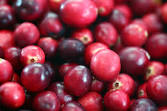
Once upon a time I copyedited a novel set in 19th-century New England that had cranberries being shipped to market in May.

Uh — no.

cranberries

Cranberries

I grew up in Massachusetts and have lived here most of my life. When fresh cranberries reach the market in early to mid fall, I stock my freezer with them because they aren’t available earlier in the year. That’s true in the 21st century, it was true in the late 20th (which was when I copyedited this novel), and it was surely true in the 19th, when transportation, storage, and other technologies were a good deal less sophisticated than they are today.

That’s known in the trade as a “good catch”: I caught something that the author, the book’s editor, and everyone who had already read the manuscript missed. Copyeditors are always catching things that everyone else missed, but this was an especially good one. That’s why I remember it more than 15 years later. (Tellingly, I can’t for the life of me remember the title of the novel or the name of its author.)

We copyeditors quite justifiably pat ourselves on the back for these catches and crow about the best ones to our colleagues.

Readers crow about them too when they find what they consider a glaring error in a published book. “Where was the copyeditor?” they cry. “Where was the proofreader?” This is often followed by a lament about how publishing, the English language, and/or western civilization is going to hell in a handbasket.

Well, if there are several glaring errors in a book, coupled with infelicities of spelling, usage, and style, it may be that it wasn’t properly copyedited or proofread at all. But errors do crop up in even the most conscientiously written, edited, and proofread works. The overwhelming majority of them, thank heavens, are minor.

Think of how many factual details go into any book-length work, fiction or nonfiction. Pity the poor author, who must focus on the whole forest while remaining acutely aware of each tree in the forest, each branch on each tree, each twig on each branch, each bud on each twig. Say you’re an expert in a particular sort of bud. Chances are good that you’ll eventually catch the author out — “No, no, no! Those buds never appear before May in the Upper Midwest!” — but chances are even better that most readers won’t notice. It won’t, and shouldn’t, undermine the credibility of the work.

Unless, of course, the work is about trees in the Upper Midwest. Then you may have a case.

swans on the Mill Pond

There’s a lot more to Martha’s Vineyard than swans on the Mill Pond, but we’ve got that too.

I live on Martha’s Vineyard, a place that is so often misrepresented in both fiction and nonfiction that much of my own writing is devoted to countering those misrepresentations. At the same time, I know that some errors are more significant than others. I don’t care (too much) if someone has a ferry sailing from Vineyard Haven at 5:15 instead of 5:00. Recently, though, I reviewed a book that got some of the geography wrong and misspelled several names that could have been verified without much trouble. Editor fail, I thought.

I do get really, really angry when someone assumes that what they’ve seen on the news is the whole truth and nothing but; that everyone here is wealthy when our median income is one of the state’s lowest.

“Write what you know” is a truism quoted ad nauseam, but I don’t mind it when it’s accompanied by its obvious corollary: “And if you don’t know it now, do your research.

This is why I was so impressed when I was contacted a couple of months ago by a writer whose novel in progress was partly set on the Vineyard. Could he ask me a few questions? Ask away, said I.

His questions were the sort that would only be asked by someone who had at least a passing acquaintance with the place. The larger world wouldn’t notice if he got these things wrong, but many Vineyarders would. I was thrilled to be asked and impressed that he cared enough to get it right. I answered as thoughtfully as I could. (Note to anyone who’s writing about Martha’s Vineyard: Contact me. I’m not kidding. If I can’t answer your questions, I can probably put you in touch with someone who can.)

This has inspired me. If I didn’t mind answering this writer’s questions — hell, no! I’m glad to be asked! — other people won’t mind answering mine. I’m not going to get all the details right, and even if I do, some people are going to disagree with me. But if I get out there and ask the questions, I’m probably going to meet some cool people and get into interesting conversations.

It’s all good.